
Professional & Reliable
Playground Turf Installation San Diego families, schools, HOAs, and childcare centers rely on needs to check three boxes at once: it has to be safe, it has to hold up to constant use, and it has to look great year-round. Top Notch Turf, based in Escondido, CA, installs cushioned, kid-safe artificial turf systems for backyards, daycares, church nurseries, apartment communities, and public play areas throughout San Diego County. If you’re planning a new play space or replacing worn-out mulch, sand, or dying grass, this guide walks through exactly what goes into a professional playground turf installation — and why it matters more than most people realize.
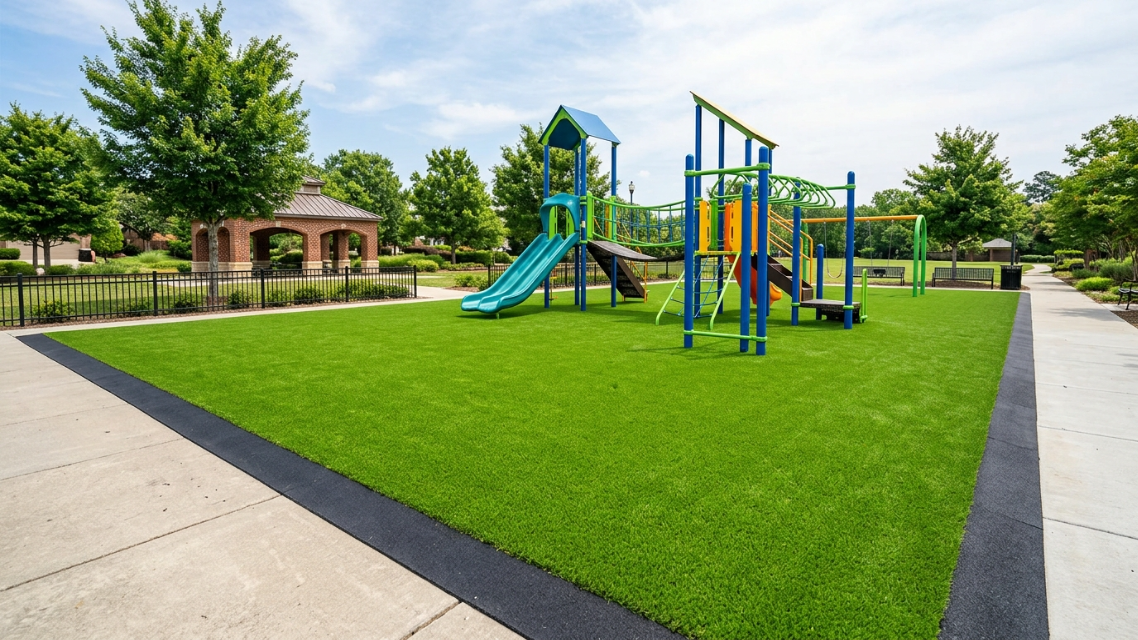
Why Playground Turf Installation Matters
Standard grass can’t keep up with playground traffic. Within a few months of heavy foot traffic, natural lawns under swing sets and slides turn into bare dirt patches, mud pits after rain, or uneven, root-exposed ground that becomes a tripping hazard. Loose-fill materials like mulch, pea gravel, and sand come with their own problems — they scatter outside the play area, harbor bacteria and pests, and need constant refilling and raking to stay compliant with recommended depth levels.
The stakes are higher than aesthetics. Falls are one of the leading causes of playground-related injuries, and the surfacing beneath a play structure is a critical safety factor, not just a design choice. A properly installed turf system with the correct shock-absorbing infill and padding is built to help cushion falls, drain quickly after rain, and stay consistent in depth and texture across the entire play zone — something loose-fill surfacing struggles to maintain over time as materials shift and compact.
There’s also a time-and-money argument. Once installed correctly, playground turf eliminates the recurring costs of reseeding, mulch replenishment, weed control, and irrigation repair. For schools, HOAs, and commercial properties managing multiple play areas, that adds up to a meaningful reduction in ongoing maintenance labor and budget.
Common Problems Playground Turf Installation Solves
Bare, muddy patches under swings and slides. High-traffic zones under moving equipment wear out natural grass fast. Turf holds its shape and color regardless of how many kids use it daily.
Uneven or compacted loose-fill surfacing. Mulch and sand shift, compact, and thin out over time, especially in high-impact zones, which can reduce the surfacing’s cushioning effectiveness exactly where it’s needed most.
Weeds, mud, and drainage issues after rain. Poor drainage under play equipment creates standing water and mud that gets tracked indoors. A properly built turf base with adequate drainage layers is designed to move water through quickly.
Allergy and pest concerns. Natural grass attracts bees, ants, and other insects, and can trigger grass allergies in kids who spend hours playing on it. Turf removes that variable entirely.
Ongoing maintenance burden for schools and HOAs. Facilities managers juggling mowing schedules, mulch top-offs, and irrigation repairs across multiple properties often find turf dramatically simplifies upkeep. If you’re comparing low-maintenance backyard ideas for Southern California properties, playground areas are usually the highest-maintenance zone worth converting first.
Fall-height and surfacing compliance concerns. Many playground owners aren’t sure whether their current surfacing meets recommended cushioning depth. A turf-and-infill system engineered for the specific fall height of the equipment addresses this directly.

Our Playground Turf Installation Process
- Site assessment and consultation. We evaluate the play area’s size, existing surfacing, drainage conditions, and the fall height of any equipment on-site, since that determines the cushioning system needed.
- Design and material selection. We recommend turf pile height, infill type, and shock-absorbing pad thickness based on the equipment and expected traffic level — a backyard swing set has different needs than a commercial play structure.
- Excavation and base preparation. Old grass, mulch, or sand is removed, and the sub-base is graded and compacted to create a stable, well-draining foundation. This step is where proper ground preparation for artificial turf makes the biggest long-term difference in how the finished surface performs.
- Shock pad and drainage layer installation. A cushioned underlayment is installed to help absorb impact and support proper water flow through the base.
- Turf installation and seaming. Turf is rolled out, precisely cut around play equipment posts and borders, and seamed for a smooth, consistent surface with no visible gaps.
- Infill application and grooming. Safety-rated infill is brushed into the turf fibers to add cushioning and keep blades upright, then the entire surface is groomed for a finished, natural look.
- Final walkthrough. We inspect edges, seams, and surrounding hardscape, and walk the site with the property owner to confirm everything meets expectations before we consider the job complete.
Why Choose Top Notch Turf
Top Notch Turf focuses specifically on artificial turf systems throughout San Diego County, including playground turf installation for residential, commercial, and institutional clients. Our crews work on everything from backyard play areas to larger community and commercial spaces, which means playground-specific details — safe infill choices, proper edging around equipment, and drainage under high-traffic zones — are part of our standard process, not an afterthought.
We also serve related turf needs across the region, including residential turf installations, commercial turf projects, and pet-friendly turf systems for properties that need play areas and pet areas to coexist. Because we handle the full range of turf applications, we bring the same base-prep and drainage standards to playground work as we do to any high-traffic, high-stakes installation.
Playground Turf Installation in Escondido and Nearby San Diego County Areas
Escondido’s inland climate brings hot, dry summers and compact clay-heavy soil in many neighborhoods — conditions that are tough on natural grass playgrounds and even tougher on loose-fill surfacing, which dries out, compacts, and blows around in wind more than turf does. Properties near West El Norte Parkway and throughout central Escondido often deal with uneven yards and drainage challenges during the rainy season, which makes proper base preparation especially important for any playground installation in this area.
We install playground turf throughout Escondido and the surrounding San Diego County communities, working with the same soil and climate conditions common across the region — from newer HOA developments with strict landscaping standards to established neighborhoods replacing decades-old play areas. If your property is anywhere near Escondido, our crews are familiar with the local terrain, permitting expectations, and the seasonal drainage patterns that affect how a playground surface performs over time.
For homeowners specifically comparing broader lawn conversion options in the area, our page on artificial grass installation in Escondido covers the fundamentals that also apply to play-area turf projects, and our Escondido artificial grass overview is a useful starting point if you’re weighing turf for more than one part of your property.
Cost, Timeline, and What to Expect
Playground turf installation costs depend on several factors: the size of the play area, the type and thickness of infill needed for the equipment’s fall height, whether existing mulch, sand, or grass needs to be removed and hauled away, site accessibility, and any custom cutting required around play structure footings. Commercial and HOA projects with larger square footage or stricter surfacing specifications will generally involve more planning time than a single backyard play area.
Timeline varies similarly — a straightforward backyard playground can often be completed in a matter of days, while larger commercial or multi-structure sites take longer due to the scale of excavation, base work, and equipment coordination involved. Weather, site drainage conditions, and the amount of prep work needed for the existing surface all factor into scheduling.
If you’re trying to compare overall investment against other surfacing options, our breakdown of DIY artificial grass vs. professional installation costs is a helpful reference point, since the base preparation and drainage work that matters most for playground durability is exactly the part that’s hardest to get right without professional equipment and experience.
The best way to get an accurate number for your specific play area is a site visit — every property’s soil, drainage, and equipment setup is different, and pricing reflects that.
Ready for a Safer, Lower-Maintenance Playground?
If worn-out mulch, muddy patches, or dying grass are making your play area harder to maintain — or just harder to look at — a professionally installed turf playground solves the problem for good. Top Notch Turf handles every step, from site assessment to final grooming, so you get a safe, consistent, low-maintenance surface built for how kids actually play.
Call us today at +1 (442) 217-9463 or email in**@**********rf.net to schedule your free playground turf installation quote in Escondido and throughout San Diego County.
Frequently Asked Questions
Is artificial turf safe for playgrounds?
Is artificial turf safe for playgrounds?
Yes, when installed correctly with the appropriate shock-absorbing pad and infill matched to the equipment’s fall height, turf is a widely used playground surfacing option. The safety comes from the full system — base prep, shock pad, and infill — not the turf blade alone, which is why professional installation matters.
How much does playground turf installation cost in San Diego?
How much does playground turf installation cost in San Diego?
Cost depends on play area size, infill and padding type, existing surface removal, and site accessibility. There’s no flat rate that applies to every property, so we recommend a site visit for an accurate quote based on your specific play area.
Is turf better than mulch or sand for playgrounds?
Is turf better than mulch or sand for playgrounds?
Turf generally requires far less ongoing maintenance than mulch or sand, which shift, compact, and need regular replenishment. Turf also stays consistent in depth and doesn’t scatter outside the play zone the way loose-fill materials do.
How long does playground turf last?
How long does playground turf last?
With proper installation and normal use, playground turf systems are built for long-term durability, though exact lifespan depends on traffic volume, sun exposure, and maintenance.
Can playground turf be installed around existing play equipment?
Can playground turf be installed around existing play equipment?
Yes. Our installation process includes precise cutting around posts, footings, and equipment bases so the turf fits cleanly without gaps or exposed edges.
Does playground turf get too hot in the summer?
Does playground turf get too hot in the summer?
Turf temperature is affected by sun exposure and infill type, similar to other surfacing materials in direct sun. Our article on why artificial turf gets hot in summer explains the factors involved and options to help manage it in play areas.
Do you install playground turf for HOAs, schools, and commercial properties, or just backyards?
Do you install playground turf for HOAs, schools, and commercial properties, or just backyards?
We install playground turf for a range of property types, including residential backyards, HOA common areas, childcare facilities, and commercial sites throughout San Diego County.
What areas near Escondido do you serve for playground turf installation?
What areas near Escondido do you serve for playground turf installation?
We serve Escondido and the surrounding San Diego County area, bringing the same base-prep and drainage standards to every playground project regardless of neighborhood or property type.