
Top Notch Turf vs DIY Turf Kits: Which Artificial Turf Company Wins for San Diego Homes?
- Home
- /
- Top Notch Turf vs DIY Turf Kits: Which Artificial Turf Company Wins for San Diego Homes?
Professional & Reliable
If you want a warranted, professionally drained, pet- and kid-safe lawn without spending your weekends on it, Top Notch Turf is the better choice; if you’re comfortable with hands-on labor and want to save on installation costs for a small, simple area, a DIY turf kit can work. When homeowners search for artificial turf companies compared against the do-it-yourself route, the decision usually comes down to time, budget, and how much risk they’re willing to take on drainage and seams. This guide breaks down both paths so San Diego homeowners can choose with confidence. Neither option is universally “better” — it depends on your yard’s size and slope, how the space gets used day to day, and how much long-term durability matters to you. Below, we walk through the real costs, tradeoffs, and warning signs of each approach.
Understanding Top Notch Turf (Professional Installation)
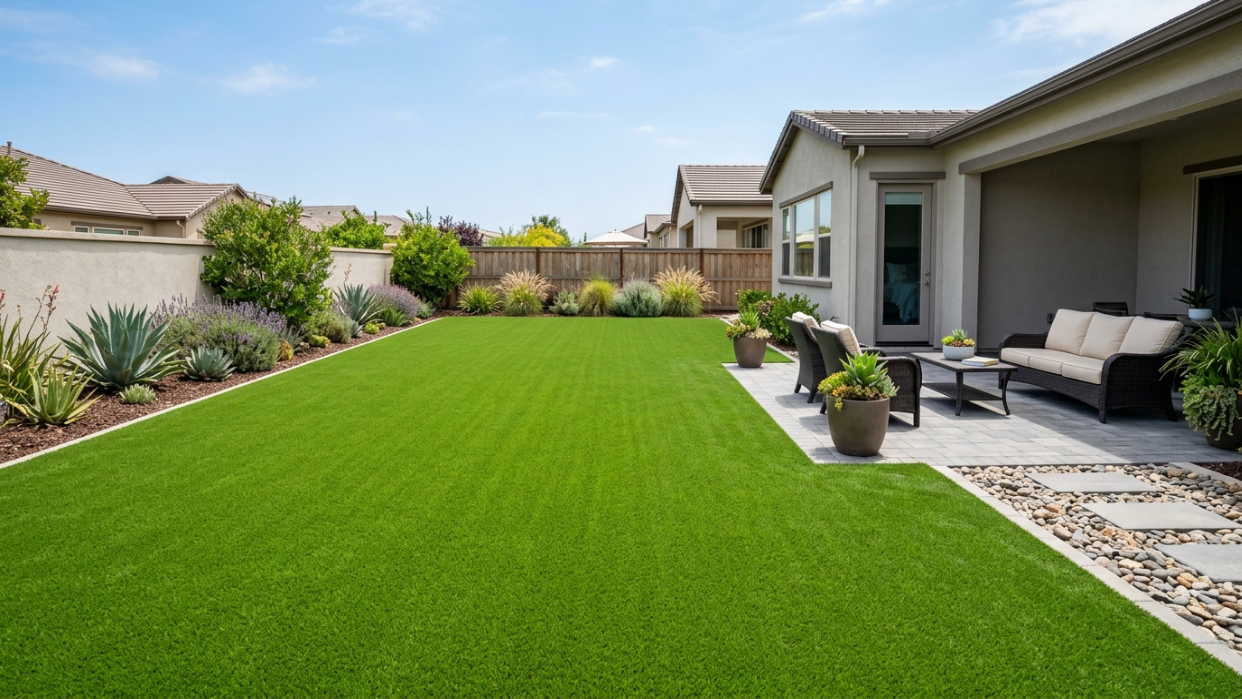
Top Notch Turf represents the professional installation route: a licensed crew handles excavation, base compaction, drainage, seaming, and infill application from start to finish. For San Diego’s clay-heavy soil and occasional heavy winter rain, proper base prep and drainage engineering matter more than the turf product itself — this is where professional installers earn their keep.
Typical costs for professional turf installation run higher upfront than DIY, generally landing in a broader per-square-foot range once labor, base materials, and disposal of old sod are included. The core benefits are a graded, compacted base that won’t shift or pool water, seams that are glued and sewn rather than simply butted together, and infill (often antimicrobial or cooling infill) applied at the correct density for the intended use — pet runs, play areas, or putting greens.
Ideal use cases include full backyard renovations, sloped or uneven lots that need drainage correction, pet owners who need odor-control infill and proper base perforation, and homeowners who want a warranty backing the workmanship, not just the turf material itself.
Understanding DIY Turf Kits
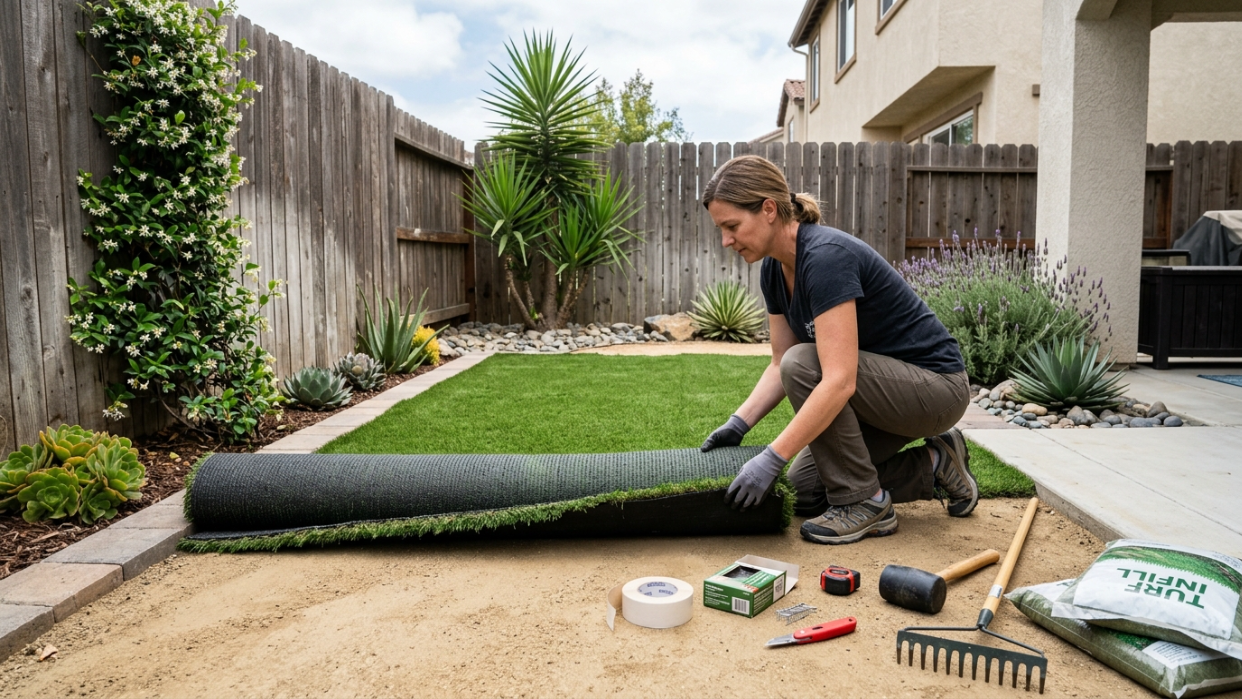
DIY turf kits are pre-cut or roll-based synthetic grass products sold through home improvement retailers and online suppliers, meant to be installed by the homeowner. The kit typically includes the turf roll, seaming tape, and sometimes infill, while the homeowner supplies labor, a rented plate compactor, base rock, and weed barrier.
Costs are lower on the surface because there’s no labor line item, but homeowners often underestimate the cost of base materials, tool rentals, and disposal fees for existing lawn. Core benefits are the lower cash outlay and full control over the installation timeline. The tradeoff is that base compaction and drainage — the two things that determine whether turf still looks good in five years — are entirely on the installer’s shoulders.
Ideal use cases are small, flat areas like a side yard strip, a dog run under 100 square feet, or a rental property where a homeowner just needs a quick, low-cost green fix rather than a long-term, warrantied installation. This is one of the most common scenarios people run into when they start researching artificial turf companies compared online.
Side-by-Side Comparison Table
| Attribute | Top Notch Turf Professional | DIY Turf Kits |
|---|---|---|
| Upfront Cost | Higher, with labor and materials included | Lower, materials only |
| Lifespan | 15–20+ years with proper base prep | Often 5–10 years if base or drainage is done incorrectly |
| Maintenance | Minimal; occasional brushing and rinsing | Higher risk of seam separation, weed growth, and pooling requiring rework |
| Drainage & Base Prep | Engineered and compacted by trained crews | Dependent entirely on homeowner skill and equipment |
| Aesthetics/Seams | Glued, sewn, and virtually invisible seams | Visible seams are common without professional tools |
| Warranty | Workmanship + material warranty typically included | Material-only warranty from manufacturer, if any |
| Time Investment | Minimal homeowner time; scheduled install | Multiple weekends of physical labor |
Pros and Cons Breakdown
Pros of Top Notch Turf (Professional Installation)
- Properly engineered drainage that handles heavy seasonal rain without pooling
- Workmanship warranty that covers labor, not just the turf material
- Faster overall timeline since a trained crew completes the project in days, not weekends
- Access to higher-grade infill options for pets, putting greens, or heat-reduction
Cons of Top Notch Turf (Professional Installation)
- Higher upfront cost compared to a DIY kit
- Scheduling required around installer availability
- Less hands-on control over the day-to-day install process
Pros of DIY Turf Kits
- Lower initial cash outlay
- Full control over timeline and process
- Reasonable option for very small, low-traffic areas
Cons of DIY Turf Kits
- Base compaction and drainage mistakes are common and expensive to fix later
- Seams are harder to hide without professional tools and technique
- Typically no workmanship warranty, only a manufacturer’s material warranty
- Physical labor and equipment rental costs add up quickly
Which Option Is Better? The Ultimate Showdown
When you weigh cost against long-term performance, the calculus shifts depending on project size. For a small, flat, low-traffic patch — a narrow side yard or a tiny dog run — a DIY kit can be a reasonable, low-risk choice, especially for a renter or someone testing out artificial turf before committing to a bigger yard. But for anything larger, sloped, shaded, or used daily by kids or pets, the math tips firmly toward professional installation.
The reason comes down to drainage. Southern California’s compacted native soil doesn’t drain well on its own, and a DIY installer without geotextile fabric and proper base grading experience often ends up with pooling water, sagging turf, or premature wear within a few years — costing more in the long run than paying for professional installation the first time. Choose Top Notch Turf if your priority is a long-lasting, warrantied lawn that holds up to the local climate and daily use; choose a DIY kit only if your budget is tight and your project is small enough that mistakes are cheap to fix.
Homeowners weighing artificial turf companies compared side by side should also factor in resale value. A professionally installed lawn tends to read as a finished home improvement to future buyers, while a visibly seamed DIY job can read as a project that still needs attention.
Making the Right Call for Your San Diego Yard
Local context matters more than most homeowners expect. If you’re weighing the two paths for a full project, it’s worth reading through how artificial turf drainage works before deciding whether a DIY approach is realistic for your lot’s slope.
Pet owners in particular should think carefully before going the DIY route. Professional-grade pet-friendly artificial grass systems use perforated backing and odor-resistant infill that’s difficult to replicate with a retail kit. For families comparing the full cost picture, this breakdown of DIY artificial grass vs. professional installation cost lays out the numbers in more detail.
If your project includes a play area, safety is a bigger factor than cost alone — see is artificial turf safe for dogs and kids for what to look for in padding and infill regardless of which installation route you choose.
For most San Diego homeowners, the decision between these two artificial turf companies compared here really comes down to one question: is this a small, low-stakes patch, or a real investment in your outdoor living space? For the latter, professional installation consistently outperforms DIY on longevity, drainage, and resale value.
Ready to Get a Professional Opinion?
If you’re still weighing your options, a walk-through with Top Notch Turf costs nothing and gives you a clear picture of what your specific yard needs. Whether you’re outfitting a residential yard, a commercial property, a dedicated pet turf area, a backyard putting green, or a safety-rated playground surface, homeowners can get a no-pressure consultation before deciding between professional installation and a DIY kit.
Conclusion & Recommendation
Both paths can result in a green, low-maintenance yard, but they aren’t equally reliable long-term. DIY turf kits make sense for small, forgiving spaces where mistakes are cheap and low-stakes. For everything else — sloped yards, pet areas, play spaces, or any project where clay soil and dry heat come into play — Top Notch Turf’s professional installation delivers a longer-lasting, better-drained, warrantied result that’s worth the higher upfront cost.
Frequently Asked Questions
1. Is DIY artificial turf cheaper than professional installation?
1. Is DIY artificial turf cheaper than professional installation?
Yes, on materials alone. But once you factor in tool rentals, base materials, old sod disposal, and the risk of redoing a poorly drained install, the total cost gap narrows significantly for anything larger than a small patch — a key point when weighing artificial turf companies compared against a purely DIY route.
2. How long does DIY artificial turf typically last compared to professional installation?
2. How long does DIY artificial turf typically last compared to professional installation?
DIY installs often last 5 to 10 years before seams separate or drainage issues cause sagging, while a properly installed professional lawn can last 15 to 20 years or more with routine care.
3. Can I install artificial turf myself in a dry Southern California climate?
3. Can I install artificial turf myself in a dry Southern California climate?
You can, but compacted native soil and a long dry season make proper base grading and drainage especially important. Skipping this step is the most common reason DIY installs fail early.
4. What’s the biggest mistake people make with DIY turf kits?
4. What’s the biggest mistake people make with DIY turf kits?
Under-compacting the base layer. Without a properly compacted and graded base, turf will develop low spots, pooling, and an uneven surface within a year or two.
5. Does artificial turf need a permit locally?
5. Does artificial turf need a permit locally?
Requirements vary by city and HOA, so it’s worth checking with your local jurisdiction or HOA before installation, whether you go DIY or professional.
6. Is professional turf installation worth it for pet owners?
6. Is professional turf installation worth it for pet owners?
Generally yes. Professional installs use perforated backing and pet-specific infill that drains urine and reduces odor far more effectively than most retail DIY kits.
7. How do I know if my yard is too sloped for a DIY turf kit?
7. How do I know if my yard is too sloped for a DIY turf kit?
If your yard has more than a slight, even grade, or any low spots where water currently collects, it’s a strong signal that professional drainage work is needed rather than a DIY approach.
8. Will a DIY turf installation affect my home’s resale value?
8. Will a DIY turf installation affect my home’s resale value?
It can, if the seams or drainage issues are visible. A professionally finished lawn tends to be viewed by buyers as a completed improvement rather than an unfinished project.