
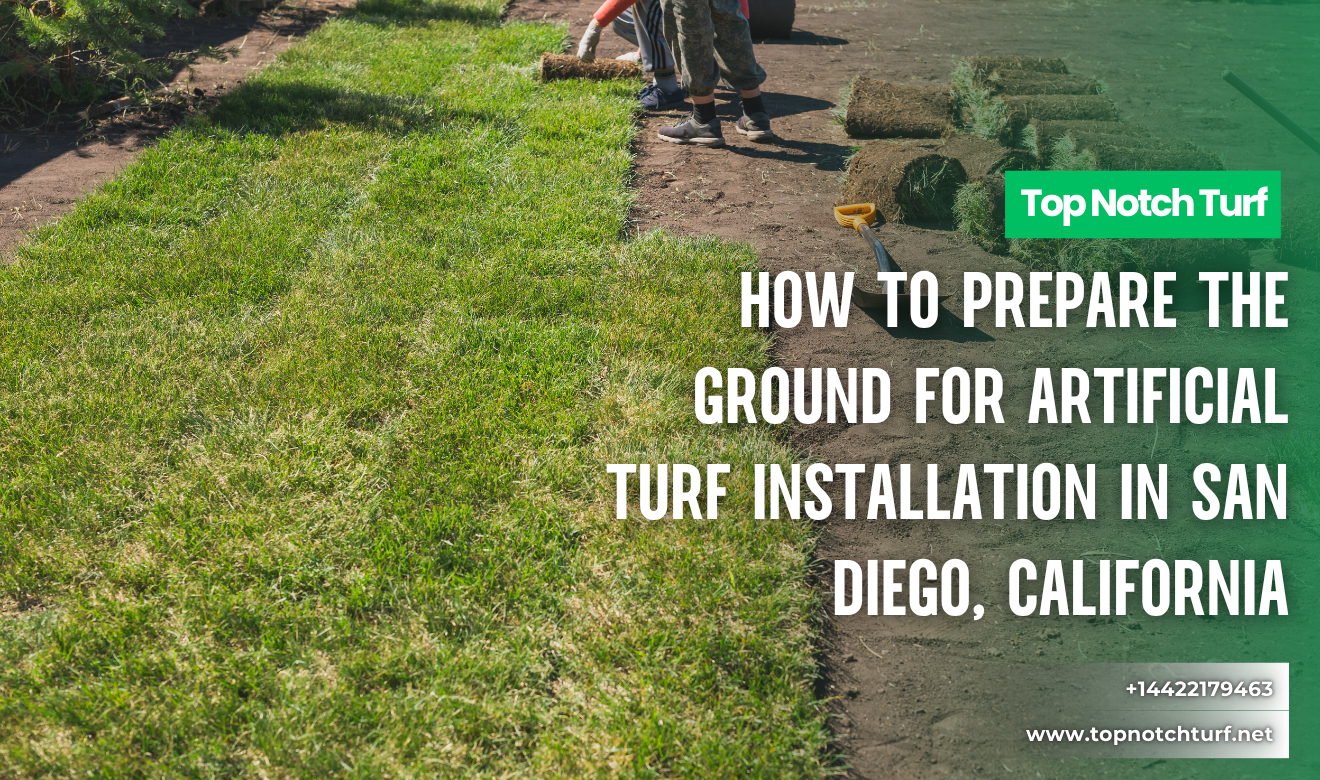
How to Prepare the Ground for Artificial Turf Installation in San Diego, California
Executive Summary
Successful artificial turf installation in San Diego depends on thorough site preparation: removing organics, establishing proper drainage slope, and building a well-compacted aggregate base. This groundwork prevents common long-term issues like puddling, lumps, and edge movement—especially under San Diego’s dry spells followed by heavy winter rains.
Key Takeaways
-
Remove organics to prevent settling: Strip sod, roots, and debris completely so decomposing material doesn’t create voids that lead to waves and low spots.
-
Grade for drainage before anything else: Shape the subgrade and base to direct water away from structures (often ~1–2% slope) and toward a planned discharge point to avoid “birdbaths.”
-
Fix irrigation and utilities early: Cap or reroute sprinkler lines and confirm there are no leaks before base installation to avoid soft, sinking areas later.
-
Install strong edging to lock everything in: Secure edging (bender board, metal, concrete, etc.) stabilizes borders and helps prevent turf creep, wrinkles, and seam stress over time.
-
Compact the aggregate base in lifts for durability: Add base material in thin layers and compact thoroughly, then fine grade and re-compact to achieve a smooth, firm, drain-ready surface.
To prepare ground for artificial turf San Diego homeowners install successfully, you need to remove existing grass, grade the area for proper drainage, compact the soil, add a solid base layer, and set clean edges before laying turf. In San Diego’s dry summers and occasional heavy winter rains, this prep step is what keeps your turf from looking lumpy, holding puddles, or shifting over time. For example, if your yard has low spots near a patio, you’ll want to fill and re-grade them so water runs away instead of pooling. And if you’re converting a front lawn that used to be sprinklered, you’ll typically cap or reroute irrigation lines so you don’t create soft, sinking areas under the turf later.
How to prepare ground for artificial turf San Diego: the step-by-step process
If you want turf that drains well, looks smooth, and stays put for years, the goal is simple: create a stable, well-compacted, properly sloped base. Here’s a homeowner-friendly workflow contractors follow to prepare ground for artificial turf San Diego installations.
1) Remove existing sod, roots, and organic material
When you prepare ground for artificial turf San Diego yards, you’re not just removing grass blades—you’re removing the organic layer that decomposes and causes settling.
- Cut and remove sod (or scrape vegetation down to soil).
- Remove roots, thatch, and loose organic debris.
- Haul away material so it doesn’t contaminate the base later.
Why it matters: Organic material breaks down and creates voids. That’s a common reason turf becomes uneven or “wavy” months later.
2) Rough grade and establish drainage slope
Proper grading is the backbone of how you prepare ground for artificial turf San Diego landscapes, especially with winter storm bursts and occasional heavy rainfall.
- Identify high/low spots and flatten humps.
- Create a consistent slope away from the home, patios, and walls.
- Plan where water should exit (street, drain inlet, swale, landscape bed).
Quick guideline: Many hardscape and landscape builds target a minimum slope around 1–2% away from structures (about 1/8″–1/4″ per foot) so water doesn’t sit next to foundations.
3) Address irrigation lines and utilities before base goes in
Before you finalize the base, deal with what’s underneath. In real projects, soft spots often trace back to a broken sprinkler line or a poorly capped riser.
- Cap or reroute sprinkler heads and drip lines that won’t be used.
- Check for leaks—wet subgrade leads to sinking and base failure.
- Mark utilities and shallow wiring so they don’t get damaged during compaction.
This is a key moment to prepare ground for artificial turf San Diego installations the right way—fixing a line after turf is installed is more expensive and disruptive.
4) Install edging for clean lines and long-term stability
Edging keeps the base and turf from creeping. It also gives you crisp borders around planters, walkways, and decomposed granite.
- Common edging options: composite bender board, concrete mow curb, metal edging, or pressure-treated lumber (where appropriate).
- Anchor edging securely so it can resist foot traffic and thermal movement.
5) Add and compact the base material in lifts
A solid base layer is what prevents footprints, ripples, and settling. When you prepare ground for artificial turf San Diego properties, base compaction is where quality shows up later.
- Use a compactable aggregate base (often a crushed rock blend).
- Compact in “lifts” (thin layers) rather than one thick, loose layer.
- Use a plate compactor and confirm firmness before moving on.
Real-world note: Compaction is not optional. The Federal Highway Administration (FHWA) emphasizes compaction as a primary factor for stable, long-lasting aggregate layers in civil construction—landscape base work follows the same physics: fewer voids means less settlement and better performance.
6) Fine grade, smooth, and proof the surface
The final grade should be smooth, consistent, and shaped for drainage.
- Rake and screed the top of the base.
- Re-compact after final shaping.
- Check for birdbaths (low spots) with a straightedge and/or light water test.
What materials you need to prepare ground for artificial turf San Diego homes
Material selection changes based on slope, soil type, use (pets/kids), and drainage demands. But most jobs rely on the same core components to prepare ground for artificial turf San Diego yards.
| component | purpose | common notes for San Diego |
|---|---|---|
| compactable aggregate base | creates a stable, drainable foundation | helps resist settlement during winter rains and high use |
| edging (bender board/metal/concrete) | locks in base and turf; defines borders | important near slopes, walkways, and patio transitions |
| weed barrier (landscape fabric) | reduces weed intrusion from below | not a substitute for excavation; best paired with clean base |
| compaction equipment (plate compactor) | densifies base for stability | critical step to prepare ground for artificial turf San Diego properties long-term |
For homeowners who want a deeper overview of what turf is and how it’s used, artificial turf has a helpful background summary.
Why drainage and compaction make or break turf performance in San Diego
San Diego’s climate tempts people to rush prep because you’re not dealing with constant rain. But the region’s pattern—dry stretches followed by occasional intense storms—can expose weak base work quickly. If you don’t prepare ground for artificial turf San Diego sites with drainage in mind, you’ll typically see one of these issues:
- Puddling (“birdbaths”): low spots hold water and create squishy turf.
- Lumps and waves: base wasn’t compacted evenly or organics were left behind.
- Edge creep: weak edging allows turf to migrate or wrinkle.
- Premature wear: high-traffic areas compress faster when the base is soft.
A practical example: patio-side low spots
A common layout problem is a lawn that dips near a patio, where runoff collects. The fix is almost always in prep: when you prepare ground for artificial turf San Diego yards, re-grade so water moves away from the patio edge and toward a planned discharge point. That may involve removing extra soil, adding base to raise the area, or reshaping the slope to avoid sending water toward the home.
How deep should you excavate to prepare ground for artificial turf San Diego yards?
Excavation depth depends on what’s there now and how the turf will be used. There isn’t a single universal depth, but these rules of thumb help homeowners set expectations when they prepare ground for artificial turf San Diego properties:
- Light-use areas: typically need less base than play zones or pet runs.
- High-traffic zones (kids/pets): often need a more robust base to prevent divots.
- Clay-heavy soils or poor drainage areas: may need deeper excavation and better drainage design.
- Transitions to concrete: base depth may be adjusted so finished turf height meets walkways cleanly.
Tip: Think in “finished grade.” Your goal is to end up with turf that sits slightly above or flush with surrounding surfaces (depending on design), without creating trip edges.
What to do about weeds, gophers, and soil movement
When homeowners prepare ground for artificial turf San Diego landscapes, they often ask if turf means “no weeds ever.” The honest answer: turf reduces weeds, but prep is what makes it consistent.
Weeds
- Remove existing vegetation thoroughly.
- Use a quality weed barrier where appropriate.
- Keep adjacent planters maintained—many weeds start at edges from wind-blown seeds.
Gophers and burrowing pests
- Consider a gopher barrier in areas with active tunneling.
- Fix gaps at edges and penetrations where animals can access the underside.
Expansive or shifting soils
Soil conditions vary across the county. If you’re unsure, consult local geotechnical guidance or a qualified landscape contractor. The more the soil moves, the more critical it is to prepare ground for artificial turf San Diego installs with proper base thickness and compaction.
Cost: what affects the price of site prep in San Diego?
Prep is often the most variable part of an install because every yard is different. If you’re budgeting to prepare ground for artificial turf San Diego homes, these are the biggest price drivers:
- Removal and hauling: sod, soil, and roots add disposal costs.
- Access: stairs, tight side yards, or limited machine access increases labor.
- Grading complexity: correcting major drainage problems takes more time and material.
- Base volume: thicker base and larger areas require more aggregate and compaction passes.
- Drainage additions: tying into drains or adding a simple collection system increases scope.
- Edge detail: curves, planters, and custom borders require more cutting and fastening.
If your project includes heavy pet use, selecting the right system matters as much as prep. Many homeowners pair strong base prep with Pet Turf Services to improve everyday durability and cleanup.
How to verify you prepared the ground correctly before turf goes down
Before the turf is rolled out, do a quick quality check. These steps catch the most common problems while they’re still easy to fix. It’s also a helpful checklist if you hired out the work and want to confirm the crew truly prepare ground for artificial turf San Diego standards.
- Walk test: the base should feel firm, not crunchy or soft.
- Straightedge test: lay a long 2×4 or level in multiple directions to spot dips.
- Slope check: confirm water will move away from structures and toward your discharge point.
- Edge check: edging should be rigid and well-anchored (no wobble).
- Cleanliness: no roots, clods, or construction debris that can telegraph through turf.
Why homeowners choose turf after they prepare the ground properly
Good prep improves performance, but many homeowners also want the bigger picture benefits—especially in water-conscious California. The U.S. Environmental Protection Agency notes that residential outdoor water use can account for a significant share of household water demand, and landscape irrigation is a major driver in many climates. Turf can reduce irrigation needs dramatically—provided you prepare ground for artificial turf San Diego yards so drainage and longevity are built in from day one.
If you’re also weighing the lifestyle and property advantages, see 5 benefits of having artificial grass lawn in San Diego for a clear breakdown of what homeowners typically gain.
Common mistakes that cause lumpy turf (and how to avoid them)
Most “bad turf” complaints trace back to skipping steps when trying to prepare ground for artificial turf San Diego installs quickly.
- Not excavating enough: turf ends up too high, edges fail, and water can run the wrong direction.
- Leaving organics: decomposition leads to depressions and wrinkles.
- Compacting only once: base settles unevenly after the first heavy rain or party.
- Ignoring drainage paths: water finds the lowest point—often near patios or doors.
- Weak edging: turf pulls loose at seams and borders over time.
When to call a pro vs. DIY for site prep
Some homeowners DIY smaller, simple spaces successfully. But if any of the items below apply, it’s usually worth professional help to prepare ground for artificial turf San Diego projects correctly:
- Yard has noticeable slope changes or water pooling.
- You need drainage tied into an existing system.
- Limited access makes hauling and compaction difficult.
- The area will get intense use (pets, kids, entertaining).
- You’re matching multiple hardscape elevations (pavers, concrete, steps).
“Set the Base, Win the Yard”
The fastest way to get turf that looks great in year one and still looks great in year five is to treat prep like the project—not an afterthought. When you prepare ground for artificial turf San Diego homes with proper excavation, grading, drainage planning, and compaction, you prevent the issues that frustrate homeowners most: lumps, puddles, and shifting edges.
Trust signal (what to look for): Choose installers who can clearly explain base thickness choices, drainage strategy, compaction approach (including lifts), and how they’ll verify final grade before turf goes down. Those are the practical hallmarks of experienced crews who consistently prepare ground for artificial turf San Diego properties to a high standard.
Frequently Asked Questions
Get a Smooth, Drain-Ready Turf Base (Without the Guesswork)
If you want your turf to look laser-flat and stay that way through San Diego’s dry spells and surprise downpours, the base is where the win happens. Top Notch Turf can help you prep the ground the right way—proper excavation, clean grading, locked-in edging, and serious compaction—so you don’t end up with puddles, lumps, or shifting seams a few months down the road.
Related Posts

Expert Guide to Backyard Turf Landscaping Ideas in San Diego, California
Executive Summary Backyard turf landscaping ideas San Diego work best when the design is built…

The Ultimate Guide to Choosing Synthetic Grass for High Traffic Areas in San Diego, California
Executive Summary Synthetic grass for high traffic areas in San Diego only holds up when…

Expert Guide to Artificial Turf Installation for Poolside Landscaping in San Diego, California
Executive Summary Artificial turf installation for poolside landscaping San Diego works best when it’s engineered…