
The Ultimate Guide to Choosing the Best Artificial Grass for Southern California: Expert Insights
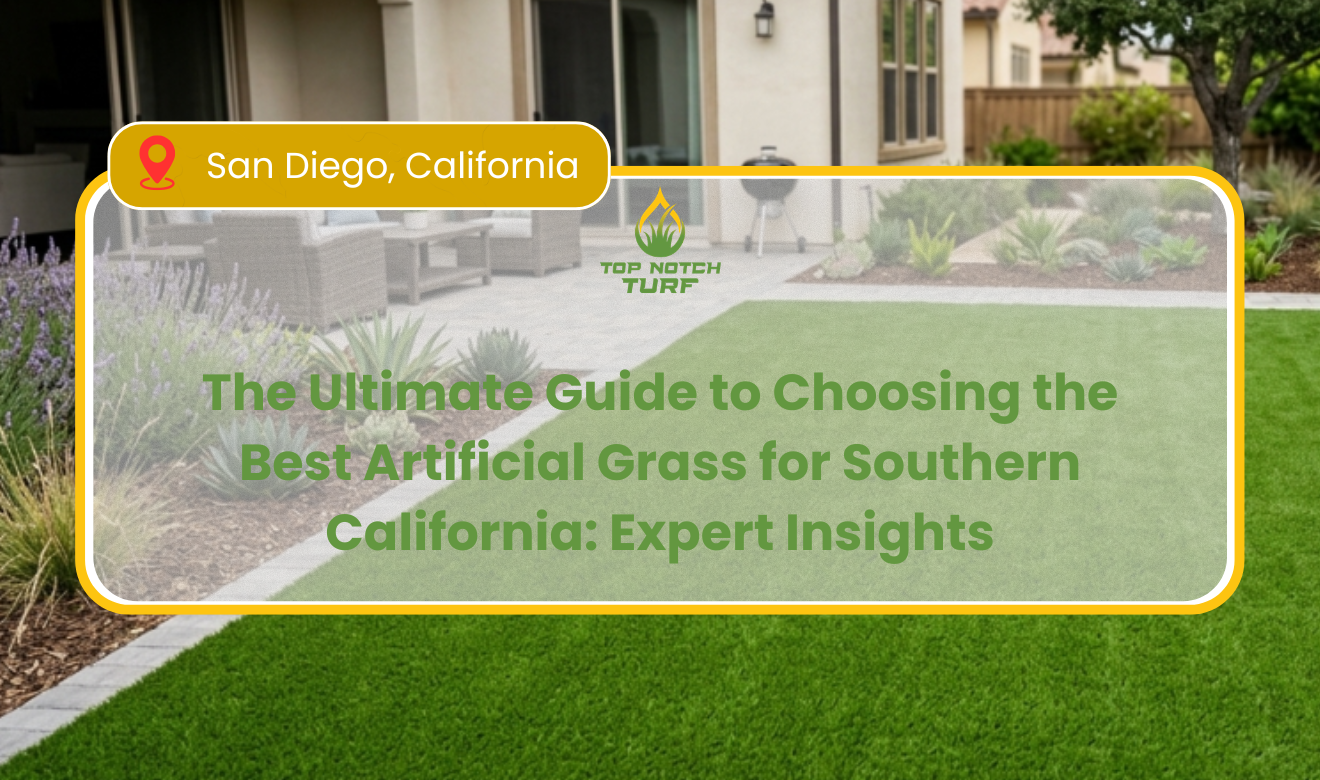
Executive Summary
The best artificial grass for Southern California is a UV-stabilized, heat-resistant, fast-draining turf system with a durable backing, realistic density, and an infill plan matched to sun exposure, pets, and traffic. Because SoCal heat cycles and winter storm bursts expose weak installs quickly, the “best” choice is verified by spec sheets and warranty language and then installed over a properly compacted, correctly graded base with a defined drainage route.
3 Core Insights
- Verify UV Protection and Warranty: Choose yarn with built-in UV inhibitors and confirm the warranty PDF explicitly covers fading/UV degradation for full-sun landscape installations.
- Drainage Is a System, Not a Feature: Use a perforated permeable backing over compacted crushed rock graded to a drain/swale so storm bursts don’t pond against patios, slabs, or planters.
- Match Fiber, Density, and Infill to Use Zones: Select resilient blade profiles and adequate face weight for recovery in small high-traffic yards, then use stabilizing sand plus antimicrobial or cooling infill where pets or barefoot comfort matter.
What Is the Best Artificial Grass for Southern California is UV-stabilized, heat-resistant, fast-draining synthetic turf with a realistic face weight and a durable backing built for drought rules and intense sun. Southern California yards see long dry seasons, Santa Ana winds, and high summer surface temps on concrete and decomposed granite. Choose turf with strong UV inhibitors to limit fading in full-sun areas like west-facing front lawns in Orange County. Choose fast drainage for winter storm bursts in Los Angeles basins and inland valley clay soils. Look for permeable backing and properly compacted base rock so runoff moves to drains or swales instead of pooling near patios. Use a blade profile that stays upright after foot traffic from kids and pets, especially in smaller San Diego side yards. Add antimicrobial infill for dog runs, and use a cooling or light-colored infill to reduce heat load on exposed stretches near pools and south-facing slopes. Specify clean, rounded silica sand or comparable stabilizing infill to support blades and reduce matting in high-use walk paths. Confirm edging and seam layout for tight radiuses around drought-tolerant plants, pavers, and sprinkler caps that are being capped or removed under local water restrictions.
Southern California turf performance checklist (what to verify before you buy)
The best synthetic lawn for this region is selected by specs you can verify on a cut sheet: UV stability, drainage rate, yarn durability, and a backing designed for heat and infrequent-but-intense rain. If a product can’t document these items, it’s a risk in full-sun and hardpan/clay yards common across Los Angeles, Orange County, and inland valleys.
Use this checklist when comparing options for front yards, side yards, dog runs, and pool surrounds:
- UV stabilization: Confirm the yarn is UV-stabilized (built into the polymer) and the manufacturer provides a defined warranty that includes fading/UV degradation for installations in full sun.
- Drainage design: Choose a perforated, permeable backing and pair it with a properly graded base so storm bursts don’t pond against slabs or planters.
- Heat management: Favor lighter yarn tones and cooling infill options where barefoot use is expected (pool decks, kids’ paths, patios).
- Blade recovery (resilience): Look for blade shapes and yarn types that spring back after traffic so narrow side yards don’t mat down.
- Infill plan: Match infill to use case (stability sand for general lawns, antimicrobial options for pets, cooling blends for high-heat zones).
- Seams/edges detail: Require a seam map and edging method that can handle curves around pavers, succulents, and capped irrigation hardware.
Best turf fiber types for intense sun, wind, and wear
Fiber chemistry and blade geometry determine how turf handles UV exposure, Santa Ana winds, and repeated foot traffic. In Southern California, prioritize yarns engineered for long-term UV exposure and recovery over ultra-soft fibers that flatten quickly in tight spaces.
Most quality landscapes use a blend of polyethylene (comfort/realism) and secondary fibers for support. When reviewing samples:
- Polyethylene (PE): Common face fiber for realistic lawns; select PE with documented UV inhibitors for west- and south-facing exposures.
- Polypropylene (PP): Often used for thatch; can run warmer and may be less durable as a primary face fiber in high-traffic zones.
- Nylon: Strong and resilient; used strategically (often in sports or high-wear areas) but typically higher cost and can feel firmer.
Blade profiles that hold up well in small yards:
- C-shape / U-shape: Good spring-back after traffic and brushing.
- Diamond / V-shape: Strong vertical support for walk paths and play zones.
- W-shaped blades: Often selected for a balance of softness and stability.
For realism, request a sample that includes two-tone or multi-tone face yarn plus a curly thatch layer to reduce the “plastic carpet” look in bright sun.
Backings and drainage: the make-or-break factor in winter storm bursts
Drainage failures come from the system, not just the turf roll: backing + base rock + grade + outlet. In Los Angeles basins and inland clay soils, choose a permeable, perforated backing and install a compacted aggregate base that sheds water to a legal discharge point.
Key elements to require in writing:
- Permeable primary backing with consistent perforations for vertical drainage.
- Durable secondary coating (commonly polyurethane or latex) designed to lock tufts without cracking in heat.
- Base aggregate: Compacted crushed rock (commonly 3/8″ minus or similar) graded away from structures.
- Drainage pathway: Flow to a drain inlet, swale, or other approved onsite routing; avoid trapping water behind edging.
California projects must also respect stormwater rules. If your property is within an area subject to municipal stormwater permits, avoid creating direct discharge of runoff that carries sediment. Keep the base stable, use clean materials, and ensure downspouts and hardscape drains are managed appropriately.
If you want a deeper technical explanation of system performance, see how artificial turf drainage works in real installations.
Heat considerations near pools, patios, and south-facing slopes
Synthetic grass will heat up in direct summer sun, especially beside concrete, block walls, and decomposed granite. The best approach is product selection plus design choices that reduce heat load where people actually stand and walk.
Heat mitigation steps that work in Southern California:
- Select lighter color blends: Mid-olive and field green mixes generally run cooler than darker, saturated greens.
- Use cooling infill where needed: Specify a cooling or heat-reducing infill for pool edges, lounge areas, and pet relief zones.
- Plan shade strategically: Pergolas, shade sails, and drought-tolerant trees reduce surface temperatures more than any single product feature.
- Separate turf from heat sinks: Add a paver band or gravel buffer between turf and south-facing masonry walls or reflective glass.
- Water misting (optional): A quick hose mist can temporarily cool the surface; confirm your local water rules before relying on this method.
For a detailed breakdown of why surfaces heat up and what to do about it, reference why artificial turf gets hot in summer.
Infill selection for stability, odor control, and blade support
Infill is not optional in most landscapes: it stabilizes the turf, supports blade posture, and affects odor and heat. Southern California installs commonly use clean silica sand for structure, then add specialized infill where pets or cooling requirements exist.
Match infill to the use case:
- General lawn (kids + light traffic): Clean, rounded silica sand (or comparable stabilizing sand) for weight, blade support, and reduced wrinkling.
- Dog runs and pet relief areas: Add an antimicrobial infill option and prioritize drainage + rinse access (hose bib proximity matters).
- High-heat zones: Cooling/light-colored infill to reduce heat absorption where bare feet are common.
To reduce pet odor buildup, you also need correct base prep and regular rinse schedules. If you’re evaluating safety and materials for family yards, review whether artificial turf is safe for dogs and kids.
Critical specifications to compare (with local guidelines)
Use the table below to compare turf products and installation requirements in a way that matches Southern California climate and permitting realities. Always request manufacturer documentation for warranties and confirm drainage planning aligns with your city’s stormwater requirements and your property’s grading constraints.
| Feature / Metric | Specifications | Local Guidelines |
|---|---|---|
| UV resistance + warranty coverage | Yarn with UV inhibitors; written warranty that explicitly includes UV degradation/fading terms for landscape use | Prioritize full-sun exposure performance for west/south-facing lawns (common in OC/IE) and reflective hardscape conditions |
| Drainage system (backing + base) | Perforated, permeable backing paired with compacted crushed rock base graded to drain; integrate drain inlets where needed | Route water away from slabs and foundations; align with municipal stormwater practices and avoid ponding in LA basin and clay soils |
| Pile height + density (traffic suitability) | Select a balanced pile height for realism without flop; higher density/face weight for resilience in walk paths and play zones | Smaller side yards in SD/LA benefit from denser products that resist matting from repetitive foot traffic |
| Infill type | Clean silica sand for stabilization; antimicrobial infill for pets; cooling infill for pool/patio exposure | Use antimicrobial options in dog runs; avoid infill choices that trap odors where rinsing access is limited |
| Edge restraint + seams | Nail/staple pattern or composite bender board (as design requires); professional seam tape + adhesive with tight nap alignment | Curves around drought-tolerant plants and pavers require a seam/edge plan to prevent lifting during heat cycles and winds |
Installation details that determine whether turf lasts 10–15+ years
Longevity depends more on base preparation and detailing than on choosing a premium roll alone. In Southern California, failures usually trace back to poor compaction, inadequate edging, or drainage shortcuts that show up after the first winter storms or a full summer of heat cycling.
Require these build steps for a durable system:
- Demo and excavation: Remove existing turf/weeds and excavate to the depth needed for base rock and final grade (especially important near slabs and fence lines).
- Weed barrier (when appropriate): Install a quality geotextile or weed barrier suited to the base design; overlap seams and secure it to prevent shifting.
- Base rock placement + compaction: Place crushed rock in lifts and compact thoroughly; verify final grade drains away from structures.
- Drainage tie-in: Install or connect to area drains where needed; ensure water has a clear route during peak rainfall events.
- Turf layout: Orient grain consistently for uniform appearance; minimize seams in visual focal areas.
- Seaming: Use seam tape and adhesive designed for outdoor turf; align blades so seams disappear in normal viewing angles.
- Infill + power broom: Distribute infill evenly and power broom to stand fibers up and lock the field in place.
If you’re deciding whether to handle prep yourself or hire a crew, compare risk points in DIY artificial grass vs professional installation cost.
Picking turf by yard type: front lawns, side yards, pets, and play
The “best” product changes by use zone: a showpiece front lawn needs realism, while a dog run needs fast drainage and odor management. Build your scope by area so you don’t overspend where you don’t need premium softness, and you don’t underbuild where performance matters.
Front yard curb appeal (full sun):
- Realistic multi-tone face fiber + thatch
- UV-focused warranty terms
- Higher density to resist flattening in mailbox-to-door walk lines
Side yards (narrow, high traffic, often shaded):
- Resilient blade profile (C/W/diamond)
- Stable infill for blade support
- Edging that resists lifting where gates slam and people pivot
Pet areas:
- Fast drainage and easy rinse access
- Antimicrobial infill options
- Odor control plan (regular rinse + deodorizing as needed)
Play zones:
- Prioritize fall protection requirements when installed under equipment
- Use appropriate underlayment/padding if required for the equipment height and site design
If the primary use is pets, consider scheduling pet turf services so drainage, infill, and odor-control detailing are designed as a system instead of piecemeal upgrades.
Material transparency: what to ask manufacturers and installers
You can validate quality quickly by asking for the exact documentation used in commercial submittals: warranty language, material specs, and care requirements. This reduces surprises around fading coverage, seam failures, or backing limitations in hot microclimates.
Ask for:
- Warranty PDF (not a sales flyer) showing coverage for UV degradation, tuft bind, and backing integrity
- Product spec sheet listing fiber composition, backing type, intended application, and infill recommendations
- Care instructions for brushing, rinsing, and stain removal (especially for pets and outdoor dining areas)
- Installation plan with seam layout, edge restraint method, and drainage routing
For general context on the material category and how it’s used across industries, see artificial turf.
“Built for SoCal” summary: the spec that wins in drought rules and harsh sun
The best artificial grass for Southern California is the product-and-installation combination that proves UV stability, drains aggressively, and stays resilient through heat cycling and heavy use. Choose a realistic, dense turf with a documented UV-backed warranty, install it over a properly compacted, graded base, and match infill to your exact yard use (pets, play, pool, or curb appeal).
When you finalize your selection, prioritize these non-negotiables:
- UV-stabilized yarn with warranty language that clearly addresses sun exposure and fading
- Permeable backing + engineered base that moves water off the surface during storm bursts
- Resilient blade profile and adequate density for foot traffic in small, repetitive pathways
- Right infill for the job (stabilizing sand for structure, antimicrobial for dogs, cooling where barefoot comfort matters)
- Professional-grade seaming and edging to prevent lifting and visible seams around curves, pavers, and plant beds
Frequently Asked Questions
Ready for a “Built for SoCal” Lawn That Doesn’t Fade, Pool, or Fall Apart?
In Southern California, artificial grass isn’t a simple “pick a color and roll it out” project—it’s a system that has to survive brutal UV, heat cycling, Santa Ana winds, and short, aggressive rain events. When turf is chosen or installed wrong, you don’t just get an ugly lawn… you get real problems: seams that telegraph (or split), edges that lift and curl, turf that mats down in your walk paths, odors that won’t rinse out in pet areas, and drainage that sends stormwater toward patios, planters, and foundations.
The biggest risk with DIY installs or out-of-area crews is that the failure points don’t show up on day one. They show up after the first heat wave when the backing expands, after the first winter storm when water finds the low spot, or after a month of normal foot traffic when the blades won’t recover because the density, infill, and base weren’t engineered for your yard’s microclimate.
Top Notch Turf helps you avoid the expensive “redo” by treating your project like what it is: a performance build. That means the right UV-stabilized product for full sun, the right backing and base for fast drainage, the right infill for pets and heat, and a professional seam-and-edge plan that stays tight around curves, pavers, and drought-tolerant landscaping.
Related Posts

Expert Guide to Backyard Turf Landscaping Ideas in San Diego, California
Executive Summary Backyard turf landscaping ideas San Diego work best when the design is built…

The Ultimate Guide to Choosing Synthetic Grass for High Traffic Areas in San Diego, California
Executive Summary Synthetic grass for high traffic areas in San Diego only holds up when…

Expert Guide to Artificial Turf Installation for Poolside Landscaping in San Diego, California
Executive Summary Artificial turf installation for poolside landscaping San Diego works best when it’s engineered…