
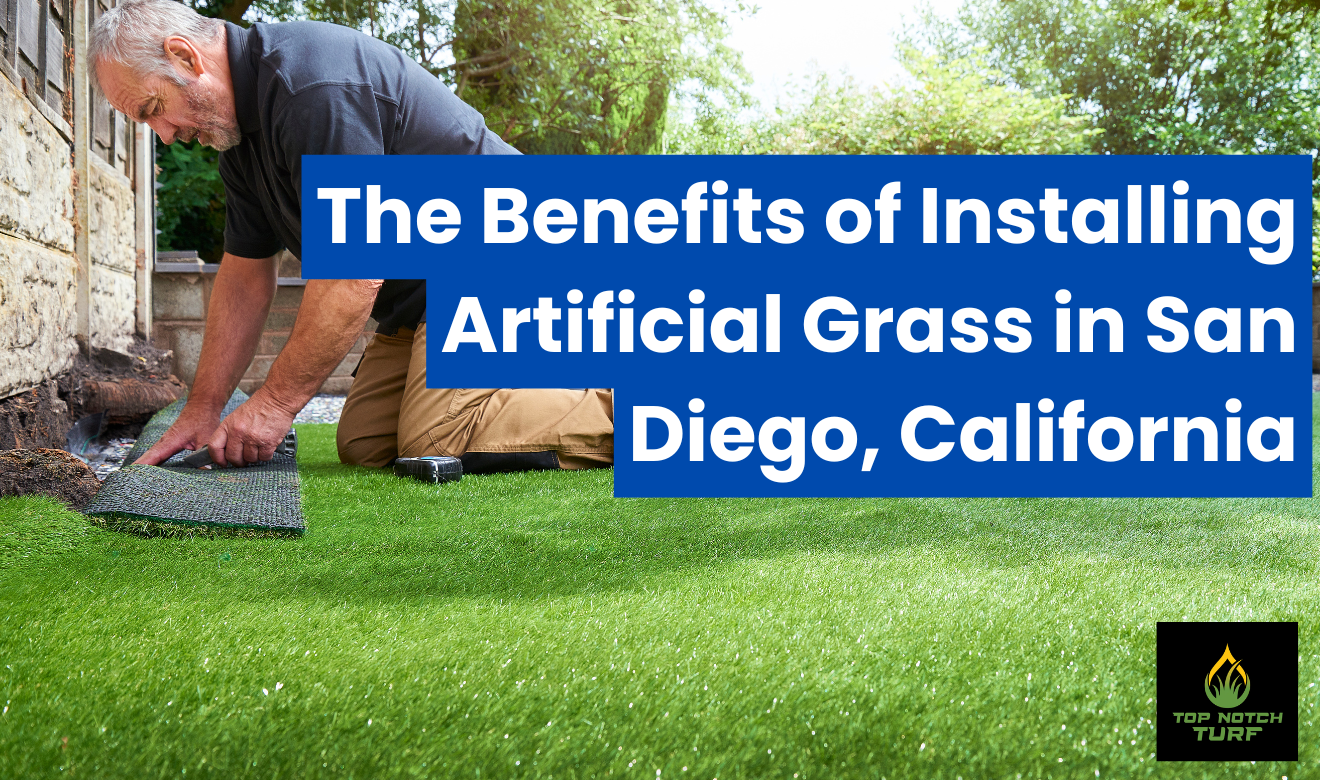
The Benefits of Installing Artificial Grass in San Diego, California
Executive Summary
Installing residential artificial grass in San Diego is positioned as a practical, low-maintenance alternative to natural lawns that supports water savings and year-round curb appeal. The article emphasizes that long-term performance depends less on the turf brand and more on correct base preparation, drainage planning, and installer workmanship.
Key Takeaways
- San Diego-specific performance depends on drainage and UV stability: Turf systems should be selected and built to handle dry stretches, occasional heavy rain, pet use, and sun exposure without fading or pooling.
- The base is the project’s “make-or-break” factor: Proper demolition, grading, compacted crushed-rock base construction, and fine grading prevent ripples, settling, and low spots over time.
- Costs vary most with site complexity and corrections: Pricing is driven by demolition and haul-away, access constraints, grading/drainage fixes, slopes, and detailed edge/seam work rather than a single flat rate.
- Choose turf by yard zone and real use-case: Front yards often prioritize realism and clean edges, while backyards and pet areas should prioritize durability, fast drainage, and easy cleanup.
- Installer vetting should focus on methods, not marketing: The best bids clearly specify base depth/material, compaction approach, drainage/downspout handling, seam construction/placement, edge securing, infill choice, and written warranty coverage.
Installing artificial grass in San Diego, California is a smart way to get a green, clean-looking yard year-round with less watering, less mess, and less maintenance. With a residential artificial grass install San Diego homeowners can skip weekly mowing and stop stressing about brown patches during hot, dry stretches. For example, a front yard can stay crisp and photo-ready even after a week of warm weather, and a backyard can handle kids running around without turning into dusty dirt or muddy spots after a rare rain. If you have pets, it also helps reduce worn-out areas and keeps the yard looking more consistent from season to season.
What makes a residential artificial grass install San Diego–friendly?
San Diego’s climate is generally mild, but lawns still take a beating from dry months, watering restrictions, coastal salt air in some neighborhoods, and high-use backyards. A residential artificial grass install San Diego homeowners choose should be designed around local conditions—especially drainage, sun exposure, and how the yard is actually used (kids, pets, entertaining, pool areas).
Key features that matter most for a residential artificial grass install San Diego project:
- Efficient drainage: Essential for rare heavy rains and for pet areas. Look for turf designed to drain quickly and a base built to move water away from the surface.
- UV stability: A quality turf face fiber should resist fading and breakdown from sun exposure.
- Heat management options: Any synthetic surface can get warm in direct sun; choosing the right infill and adding shade elements can help.
- Realistic look and feel: Mixed blade shapes, varied green tones, and thatch layers can make a yard look more natural.
- Right pile height for use: Shorter isn’t always “worse”—it can be better for high traffic, pets, and easier cleanup.
For readers who want background on how the material evolved and how it’s used beyond lawns, see artificial turf.
How does the residential artificial grass installation process work?
A residential artificial grass install San Diego project is only as good as the base and drainage. Here’s the typical step-by-step process many homeowners can expect, written in plain language for quick scanning.
1) Site prep and demolition
- Remove existing sod, weeds, and organic material.
- Address sprinkler caps (often irrigation is reduced or converted to drip for planters).
- Check grading so water flows away from the home.
2) Build a stable, drainable base
- Add and compact a base layer (commonly crushed rock) in lifts.
- Fine-grade the surface to smooth out dips and prevent “wavy” turf.
- In some situations, add a weed barrier and/or drainage improvements.
3) Lay turf, seam, and secure
- Roll out turf in a consistent grain direction for a uniform look.
- Cut edges cleanly around hardscape and planting beds.
- Seam sections carefully so joins disappear at eye level.
- Secure edges with nails/spikes and reinforce high-traffic transitions.
4) Add infill and final grooming
- Spread infill (type depends on goals—cooling, support, pet odor management).
- Power broom/brush fibers upright and confirm evenness.
- Final walkthrough to verify drainage and edge detail.
Homeowners often ask how long a residential artificial grass install San Diego project takes. For many typical yards, the on-site install can be completed in a few days, depending on demolition, access, grading, and how much hardscape/edging is involved.
Cost: What does a residential artificial grass install San Diego typically cost?
Pricing depends on site access, demolition needs, base depth, drainage requirements, turf type, and detail work (curves, planters, slopes). Instead of giving a one-size-fits-all number, use this checklist to estimate what will push cost up or down.
What increases cost the most?
- Large demolition/removal: Thick sod, roots, or hauling constraints.
- Drainage corrections: Fixing negative slope, adding drains, or regrading.
- Complex shapes: Many curves, tight side yards, or lots of cut-ins.
- Slopes: Extra securing, steps/terracing, and erosion control.
- Premium turf systems: Higher-end face fibers, thatch layers, specialty infills.
What can reduce cost?
- Easy access: Wide gates and close driveway access reduce labor time.
- Simple layout: Rectangular yards and fewer obstacles.
- Stable existing grade: Minimal drainage changes required.
If you’re comparing quotes for a residential artificial grass install San Diego home, ask each contractor to specify base depth, compaction approach, drainage plan, seam method, and what’s included in cleanup/haul-away. Those details usually explain price differences.
Why homeowners replace natural grass with turf in San Diego
Most people start researching residential artificial grass install San Diego options for one of three reasons: water savings, time savings, or a yard that actually stays usable.
Water use and drought reality
Outdoor irrigation is often the biggest slice of household water use in the U.S. The U.S. Environmental Protection Agency notes that roughly 30% of residential water use is outdoors, and in drier regions it can be 50% or more. That’s why replacing a thirsty lawn with a residential artificial grass install San Diego homeowners can rely on is commonly viewed as a practical drought-response upgrade—especially when paired with climate-appropriate landscaping and drip irrigation for plants.
Less maintenance, fewer weekend chores
- No mowing, edging, or fertilizing a lawn
- No reseeding bare spots
- Less mud tracked inside after rain
Consistency for curb appeal and entertaining
Real-world example: many families notice that high-traffic paths between a patio and play area go bare first. A residential artificial grass install San Diego setup can reinforce those “desire lines” so the yard still looks even and intentional after parties, kids’ play, or frequent dog zoomies.
For homeowners thinking about resale impact and first impressions, see incorporating artificial grass to improve property value in San Diego.
What type of turf is best for front yards, backyards, and side yards?
The best turf is the one that matches how you live. A residential artificial grass install San Diego plan usually works best when different zones are treated differently (even if the turf style stays the same).
| Area | What to prioritize | Common turf traits |
|---|---|---|
| Front yard | Curb appeal, realism, clean edges | Mid pile height, varied blade tones, dense thatch |
| Backyard play/traffic | Durability, fast drainage, spring-back | Moderate pile height, strong backing, stable infill |
| Pet zone | Odor control, rinseability, hygiene | High drainage rate, antimicrobial options, pet-friendly infill |
| Side yard/utility run | Low maintenance, access, weed control | Shorter pile height, tight edges, simple layout |
Many homeowners end up doing a phased residential artificial grass install San Diego approach: front yard first for curb appeal, then the backyard once they see how the look holds up through daily life.
How to choose the right installer (and avoid common mistakes)
Most issues people complain about—wrinkles, poor drainage, visible seams—trace back to base prep or rushed finishing. Use this list to screen bids for a residential artificial grass install San Diego project.
Questions that uncover quality fast
- How will you handle drainage? Listen for grading, compaction, and base permeability—not just “it drains.”
- What base depth and material are included? A stable base is the foundation of a long-lasting surface.
- How are seams made and where will they land? Good planning hides seams from primary viewing angles.
- How are edges secured along concrete and planters? Crisp edges prevent lifting over time.
- What infill is used and why? The “why” should match your yard: pets, sun, traffic, softness.
Common mistakes to watch for
- Insufficient compaction: Leads to settling and low spots.
- Bad transitions: Tripping edges where turf meets concrete.
- Ignoring downspouts: Concentrated roof runoff can overwhelm a section without planning.
- Cutting corners on seams: Cheap seam tape or poor alignment shows quickly.
A good residential artificial grass install San Diego outcome should look smooth, drain well, and feel stable underfoot—without “spongy” areas or visible ripples.
Pet and kid considerations: cleanliness, safety, and comfort
Pets are a major driver of residential artificial grass install San Diego demand because worn-out natural grass becomes a dirt patch fast. Turf can help, but only if the system is designed for rinse-through and odor management.
For pets
- Drainage is non-negotiable: Better drainage reduces lingering urine.
- Rinse routine: A quick hose-down helps, especially in warm months.
- Pick the right infill: Some infills are chosen specifically to reduce odor retention.
If pet cleanup is your biggest concern, these practical tips for cleaning up pet waste from artificial grass in San Diego break down what actually works day-to-day.
For kids
- Even surface: Reduces trip hazards compared with uneven natural lawns.
- Better playability: Less mud, fewer bare patches.
- Optional padding: For play zones, adding an underlayment can increase impact attenuation.
Homeowners with heavy pet use often explore specialized options like Pet Turf Services to prioritize drainage and cleanup. That can be a smart add-on within a broader residential artificial grass install San Diego plan.
How to maintain artificial grass in San Diego (simple routine)
One reason a residential artificial grass install San Diego project is so popular is that maintenance is predictable. It’s not “zero,” but it’s straightforward.
Weekly (or as needed)
- Remove leaves and debris with a leaf blower or plastic rake
- Spot-clean spills
- Pick up pet waste promptly
Monthly
- Brush fibers upright in high-traffic zones
- Rinse pet areas (frequency depends on use and heat)
Seasonal
- Check edges for lifting after temperature swings or heavy use
- Inspect drainage points and downspout outlets
- Refresh infill if traffic has displaced it
With that routine, a residential artificial grass install San Diego lawn typically stays evenly green and “finished” looking with far less effort than natural grass.
What to expect for lifespan, warranty, and long-term value
Lifespan depends on product quality, UV exposure, how heavily the lawn is used, and how well the base was constructed. From a value standpoint, many homeowners view a residential artificial grass install San Diego project as:
- A water-use strategy: especially when outdoor irrigation is the biggest controllable portion of the bill
- A time-saving upgrade: less mowing and lawn repair
- A usability upgrade: more “always ready” space for family life
When comparing options, ask for warranty details in writing and confirm what’s covered (e.g., UV fading, backing integrity, installation workmanship). The best results come when product selection and installation standards match the realities of San Diego heat, soil, and drainage.
“Green All Year, Stress Less”
A residential artificial grass install San Diego homeowners choose should do three things well: drain correctly, look natural from the street, and hold up to real life—kids, pets, parties, and long sunny stretches. When the base is properly compacted, seams are planned and hidden, and the turf is matched to your yard’s use, the result is a clean, consistent outdoor space that doesn’t demand constant watering and weekend maintenance.
For trust and accountability, look for installation teams with documented experience in grading and drainage, familiarity with Southern California water-use realities, and industry-standard safety and quality practices—such as proper base compaction methods, correct seam construction, and clear warranty terms. Those fundamentals matter more than marketing, and they’re what separate a “looks good today” yard from a residential artificial grass install San Diego project that still looks great years later.
Frequently Asked Questions
Ready for a Lawn That Looks “Done” Every Day?
If you’re considering a residential artificial grass install in San Diego, the fastest way to get it right is to start with a plan that matches how you actually use your yard—pets, kids, shade, drainage, and all. Top Notch Turf can help you choose the right turf, build a solid base, and nail the finishing details so your yard stays clean, green, and low-maintenance year-round.
Related Posts

Comprehensive Guide to Artificial Grass Installation for Sloped Yards in San Diego, California
Key Takeaways Artificial grass installation for sloped yards San Diego lasts when the hillside is…

Expert Guide to Backyard Turf Landscaping Ideas in San Diego, California
Executive Summary Backyard turf landscaping ideas San Diego work best when the design is built…

The Ultimate Guide to Choosing Synthetic Grass for High Traffic Areas in San Diego, California
Executive Summary Synthetic grass for high traffic areas in San Diego only holds up when…