
Backyard Putting Green Installation Cost in San Diego, California
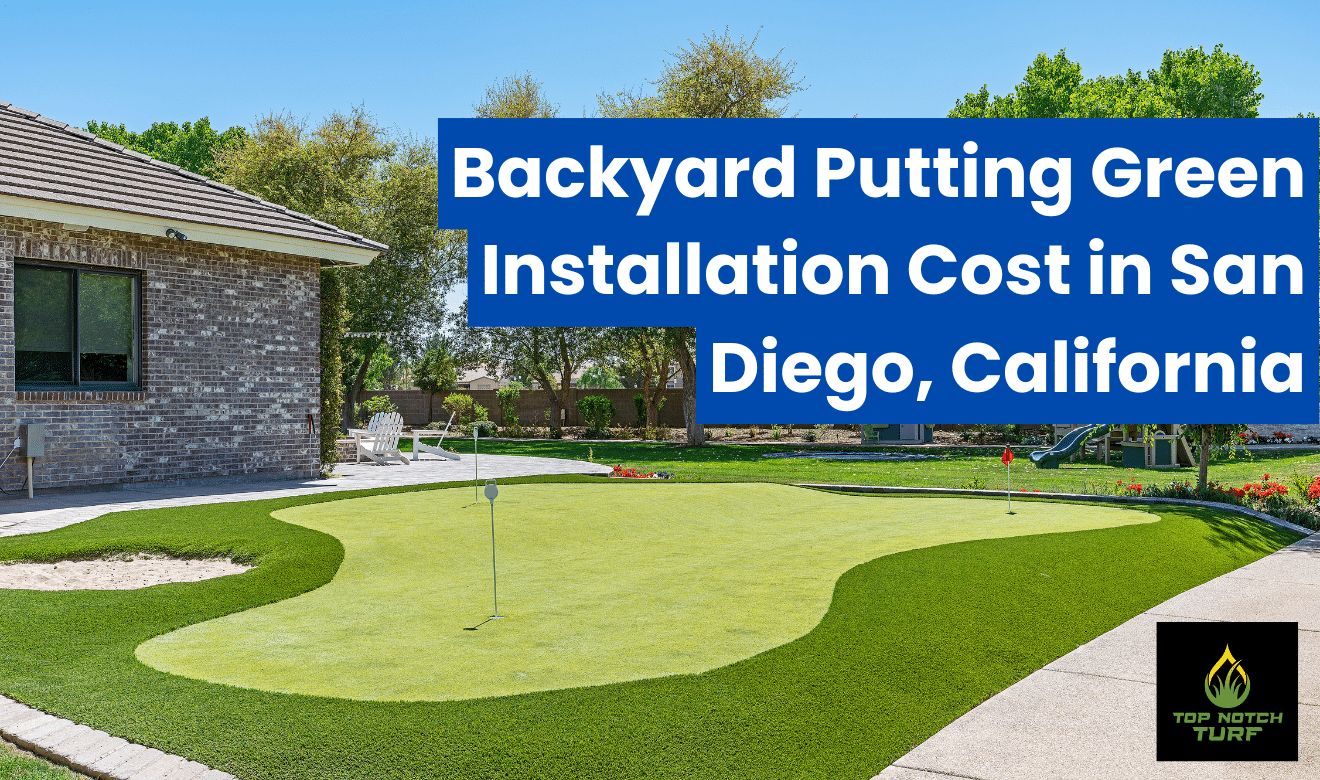
Executive Summary
Backyard putting green installation cost in San Diego typically falls between $15 and $35 per square foot, with the final price driven less by the turf and more by excavation, base compaction, drainage planning, and contour complexity. Simple, accessible side-yard greens often land in the low thousands, while larger builds with multiple cups, tiers, fringe, and added drainage commonly reach five figures.
Core Insights
- Base Prep Is the Main Cost Driver: San Diego quotes rise when installers must excavate 3–6 inches, remove organics, and compact DG/aggregate in multiple lifts to prevent settling and roll inconsistencies.
- Drainage and Soil Conditions Change the Scope: Clay-heavy subgrades, coastal moisture, slopes, and canyon-adjacent runoff frequently require geotextile, drain rock, or subsurface drainage to avoid pooling and saturated bases.
- Features and Finishing Add Labor-Heavy Precision: Multiple cups, fringe, hardscape edging, and realistic contouring increase layout time, material quantities, seam strategy complexity, and final topdressing/speed tuning requirements.
Backyard putting green installation cost in San Diego typically ranges from about $15 to $35 per square foot for professional design, base prep, turf, and finishing details. The exact backyard putting green installation cost San Diego homeowners pay depends on square footage, site access, drainage needs, and the level of contouring required for realistic ball roll. A 200 sq ft side-yard green in Clairemont with easy wheelbarrow access and minimal grading often lands around $3,000 to $6,000 installed. A 500 sq ft green in Carmel Valley with multiple cups, built-up tiers, and a short fringe can run $10,000 to $17,500, especially when the yard needs extra base work to manage runoff. Base construction drives pricing in coastal and canyon-adjacent areas because installers often remove 3–6 inches of soil, compact decomposed granite in lifts, and add geotextile plus a drain rock layer when the subgrade is clay-heavy or holds water after winter storms. Local permitting is not usually required for turf alone, but costs rise when the project includes excavation near retaining walls, added drainage tie-ins, or a concrete curb edge for a clean line against pavers. Material choices also affect totals, such as higher-density putting turf for faster stimp speeds, 4-inch cups with proper sleeves, and seam placement that avoids putt lines under common approach angles.
What Drives Putting Green Pricing in San Diego Backyards
San Diego putting green budgets rise or fall based on labor-heavy site preparation and performance details that affect ball roll. The biggest cost levers are excavation depth, base compaction quality, drainage management, and contour complexity.
Putting greens are not priced like simple lawn turf because the surface must remain stable and true under foot traffic, topdressing, and seasonal temperature swings. The variables that most consistently change installed totals include:
- Total square footage (more area reduces the per-square-foot rate, but increases total material and labor).
- Access constraints (stairs, narrow side yards, or long hauling distances increase crew time and dumping costs).
- Existing soil conditions (clay-heavy or saturated subgrade often requires additional drain rock, fabric, and graded transitions).
- Cut/fill volume (building up tiers or flattening slopes adds labor, aggregate, and compaction time).
- Design features (multiple cup locations, fringe, bunker-style borders, curbing, or paver tie-ins).
Typical Line-Item Cost Components (How Quotes Are Built)
A professional quote is usually a bundle of measurable construction steps rather than a single turf price. Understanding the line items makes it easier to compare bids and spot shortcuts that lead to bumps, seams, or drainage issues.
Most San Diego installations include the following cost categories:
- Design and layout
- Green shape, cup placement, contours, and approach angles.
- Marking irrigation heads, lighting conduit, cleanouts, and utility corridors before excavation.
- Demolition and excavation
- Removal of sod, roots, and organic topsoil that can decompose and create settlement.
- Typical removal depth is several inches; deeper removals may be needed for unstable soils.
- Base build
- Geotextile separation layer (commonly used to keep fines from migrating into drain rock).
- Drain rock layer where required for permeability and to prevent perched water.
- Decomposed granite (DG) or similar aggregate base compacted in lifts for a firm, shapable platform.
- Edge restraint and transitions
- Nailer board, bender board, concrete mow curb, or compacted aggregate edge, depending on adjacency to pavers or planting.
- Fringe integration to prevent visible edges and to create realistic run-in areas.
- Putting turf, fringe turf, and seaming
- Higher-density putting turf generally costs more than landscape turf because it’s engineered for tighter blade structure and consistent roll.
- Seams must be oriented and placed so common putt paths avoid crossing seam lines.
- Infill, topdressing, and speed tuning
- Silica sand topdressing is used to set the fibers, add weight, and tune firmness and roll.
- Final grooming and rolling affects stimp-like performance and break behavior.
- Cups, sleeves, and flags
- Standard golf cup diameter is 4.25 inches.
- Proper sleeves improve long-term cup stability and allow replacement without tearing turf.
- Hauling and disposal
- Dump fees and transport often scale with excavation volume and access difficulty.
San Diego Site Conditions That Commonly Add Cost
In this region, water movement and slope management are the most frequent causes of change orders. Coastal moisture, clay lenses, and canyon-adjacent runoff can require more robust base and drainage work than a flat inland yard.
Conditions that tend to increase the installed total include:
- Clay or expansive soils that hold water after storms, which can require:
- Additional drain rock thickness
- Geotextile separation
- Careful grading to prevent water from sitting at low points
- Yards draining toward structures, where you may need:
- Surface grading away from the house
- Drainage tie-ins that comply with local stormwater rules
- Proximity to retaining walls where excavation depth may be limited and compaction must be controlled to avoid undermining.
- Tree roots (ficus, pine, and other mature landscaping) that complicate excavation and can cause future heaving if not managed correctly.
- Limited access in side yards common in older neighborhoods, increasing labor for hand-carry and wheelbarrow work.
Drainage and Stormwater: What’s “Normal” vs. What Triggers Extra Work
Putting greens must shed water quickly to maintain consistent roll and to avoid base saturation. Drainage costs typically jump when a yard cannot rely on simple surface flow and needs subsurface components or tie-ins.
Most installers plan drainage using a combination of:
- Surface pitch that moves water off the putting surface and away from foundations.
- Permeable base layers that allow vertical drainage through the turf and infill.
- Subsurface drainage (where necessary) using drain rock and/or perforated pipe to move water to a suitable discharge point.
For any tie-in to an existing drain system, the work should follow standard local practice: avoid discharging onto neighboring lots, avoid creating erosion pathways, and maintain cleanouts where required for maintenance access. If your yard’s only feasible discharge path is near a property line or shared easement, verify constraints before excavation begins.
Performance Specs Homeowners Should Ask For (Not Just “Nice Turf”)
A durable, realistic green depends on measurable construction details, not marketing labels. Asking for specific build specs improves quote comparability and reduces the risk of soft spots, wrinkles, or inconsistent speed.
Use these checkpoints when reviewing proposals:
- Compaction method
- Base should be compacted in multiple lifts, not a single thick layer.
- Installer should identify the compaction equipment planned (plate compactor vs. roller) based on access and depth.
- Base material specification
- DG or aggregate base should be graded and compactable, not rounded river rock that shifts under load.
- Contour plan
- Ask how contours are built (hand shaping + compaction) and how transitions are tested for ball roll.
- Seam strategy
- Ask where seams will be located and how they’ll be oriented relative to common putt lines.
- Confirm adhesive/seaming method and cure time before topdressing and play.
- Infill and topdressing plan
- Confirm silica sand type and whether the installer will do a final roll/groom for speed tuning.
- Cup and fringe details
- Confirm cup diameter (4.25″) and whether sleeves are installed.
- Confirm fringe width and turf type to create realistic run-in and chipping zones.
If you want a deeper overview of how artificial turf is constructed and used across sports and residential applications, it’s helpful background for understanding why base prep matters more than the carpet itself.
Core Specs and Local Guidelines (San Diego-Focused) in One Table
This table summarizes the construction metrics that most affect price, longevity, and playability. Use it as a checklist when you compare bids and scope documents.
| Feature / Metric | Specifications | Local Guidelines |
|---|---|---|
| Golf cup size | 4.25-inch diameter cups with sleeves set flush to finished turf height | Use standard golf dimensions for realistic practice; confirm sleeve stability to prevent settling in compacted DG |
| Base construction approach | Excavate organics; install separation fabric as needed; compact DG/aggregate in multiple lifts; add drain rock where subgrade holds water | Coastal and canyon-adjacent yards often require more drainage planning due to runoff pathways and clay lenses after winter storms |
| Seam placement | Seams kept out of primary putt lines; bonded and cured before infill/topdress | Ask for seam map during layout; avoid seams running straight at cups from common approach angles |
| Drainage strategy | Surface pitch + permeable base; add subsurface drain components when pooling risk exists | Do not create discharge onto neighboring lots; verify safe discharge points before trenching |
Design Options That Change the Final Total
Play features are where budgets can expand quickly because they add labor, materials, and precision finishing. The most cost-effective greens keep contours modest and concentrate realism in the cup and fringe areas.
Common upgrades (and why they cost more) include:
- Multiple cup locations: more coring, sleeves, finishing, and layout time.
- Built-up tiers and spines: requires added base material, careful compaction, and more time testing roll consistency.
- Fringe and chipping apron: adds square footage and often a second turf type plus transition work.
- Edging against hardscape: concrete mow curbs or tight paver transitions increase layout precision and labor.
- Practice stations: integrated return slope, hitting mat area, or alignment markings.
How to Compare Contractor Bids Without Guessing
The best way to compare bids is to standardize scope and ask for a written construction sequence. This prevents one quote from looking cheaper simply because it omits excavation depth, drainage layers, or finishing steps.
Request these items in writing:
- Excavation depth and disposal plan (how many inches removed; where material goes).
- Base layer details (materials, thickness ranges, and whether a separation fabric is included).
- Compaction process (number of lifts, equipment used, and how contours are locked in).
- Drainage scope (surface grading only vs. added drain rock/perforated pipe; discharge location).
- Turf specifications (putting turf vs. fringe turf type; seaming method; grain direction plan).
- Number of cups and whether sleeves/flags are included.
- Finishing (topdressing quantity, grooming, and final roll/speed tuning).
- Warranty terms (coverage for seam separation, settling, or workmanship-related issues).
Related Turf Projects That Pair Well With a Putting Green
Bundling adjacent turf scopes often reduces mobilization costs and creates cleaner transitions across the yard. The most common pairings are pet zones, play areas, and landscape turf that matches the green’s border.
If you’re building a full practice and entertainment space, consider adding Putting Greens Turf Services as a defined scope that includes fringe integration and cup placement planning, then coordinate nearby surfaces for consistent drainage and finish elevations.
For homeowners designing around outdoor living features, this reference on creating a perfect pool area with high-quality synthetic grass in San Diego is useful for understanding how installers handle splash zones, traffic patterns, and clean borders near hardscape.
Cost-Control Moves That Don’t Sacrifice Ball Roll
You can lower total spend while protecting playability by simplifying geometry and keeping the base build consistent. The key is to reduce high-labor features (complex tiers and hardscape edges) rather than cutting compaction or drainage steps.
Practical ways to manage budget:
- Choose one or two cups instead of several, and prioritize cup placement over extra square footage.
- Limit extreme tiers; use subtle breaks that still allow practice on left-to-right and right-to-left putts.
- Keep edges simple with a clean compacted border or landscape transition where possible.
- Use a consistent fringe width rather than a wide apron everywhere.
- Preserve access (temporary panel paths) so crews can move base material efficiently and avoid hand-carry time.
Key Takeaways: What a “Good” San Diego Putting Green Install Looks Like
A high-performing backyard green in San Diego is defined by stable base construction, predictable drainage behavior, and seam/cup workmanship that stays invisible during play. Cost is primarily a function of excavation, compaction, drainage requirements, and the labor needed to shape realistic contours.
When you’re reviewing proposals, prioritize written specs over broad promises:
- Base built in compacted lifts with appropriate aggregate and (when needed) fabric and drain rock
- Surface grading that moves water away from structures and prevents pooling
- Standard 4.25-inch cups installed with stable sleeves
- Seams mapped to avoid primary putt lines and bonded correctly before topdressing
- Final grooming/topdressing that tunes speed and keeps roll consistent across contours
When those elements are clearly defined in scope, the final installed price becomes easier to predict—and the green is far more likely to stay smooth, fast, and true through San Diego’s seasonal weather shifts.
Frequently Asked Questions
Ready for a Backyard Putting Green That Rolls True (And Stays That Way)?
If you’re pricing a backyard putting green in San Diego, here’s the part most homeowners don’t find out until after install day: the turf is the easy part. The performance (and the long-term headaches) come down to what’s underneath—excavation depth, base compaction in lifts, drainage strategy, seam placement, and how contours are locked in so they don’t shift after the first winter storms.
Try to shortcut this without an experienced local pro, and the “small” mistakes can turn into expensive fixes fast—soft spots that telegraph through the surface, seams that land right on common putt lines, low areas that hold water and slow the roll, or base settlement that creates ripples you can’t unsee (or putt through). In San Diego yards—especially near clay-heavy soils, slopes, or canyon-adjacent runoff—poor drainage planning can also push water toward structures, trigger repeated rework, and turn a fun upgrade into a constant maintenance problem.
Top Notch Turf builds putting greens with the right construction sequence: proper excavation, stable compacted base, smart drainage decisions, clean transitions, and cup/seam workmanship that disappears during play. If you want real ball roll, predictable speed, and a green that holds up season after season, get a quote built on specs—not guesses.
Related Posts

Comprehensive Guide to Artificial Grass Installation for Sloped Yards in San Diego, California
Key Takeaways Artificial grass installation for sloped yards San Diego lasts when the hillside is…

Expert Guide to Backyard Turf Landscaping Ideas in San Diego, California
Executive Summary Backyard turf landscaping ideas San Diego work best when the design is built…

The Ultimate Guide to Choosing Synthetic Grass for High Traffic Areas in San Diego, California
Executive Summary Synthetic grass for high traffic areas in San Diego only holds up when…