
Top Backyard Putting Green Ideas to Enhance Your Outdoor Space in California
Executive Summary
Backyard putting green ideas that perform well in California come down to measurable grading, base compaction, and controlled drainage first—then turf selection, cups, and fringe upgrades. A properly built 200–600 sq ft synthetic green with verified slope, stable edges, and an appropriate base/drain plan will roll true and stay flat across coastal moisture, inland heat, and winter storms.
3 Core Insights
- Plan for Break + Drainage Early: Lock in size, cup locations, and a positive runoff direction (commonly ~3/8 inch per foot) so water sheds away from slabs and foundations while still producing realistic putt lines.
- Base Quality Drives Stimp Consistency: A hardscape-style build (typically 2–4 inches of compacted crushed rock installed in lifts, with geotextile where needed) prevents settling, ripples, and seam telegraphing.
- Match the System to Your Microclimate: Coastal yards need fast-draining design and seam stability, inland yards benefit from heat-managed infill and thicker uniform bases, and hillside sites often require tiering plus a defined outlet like a French drain.
Article Text
[Insert Article Text Here]
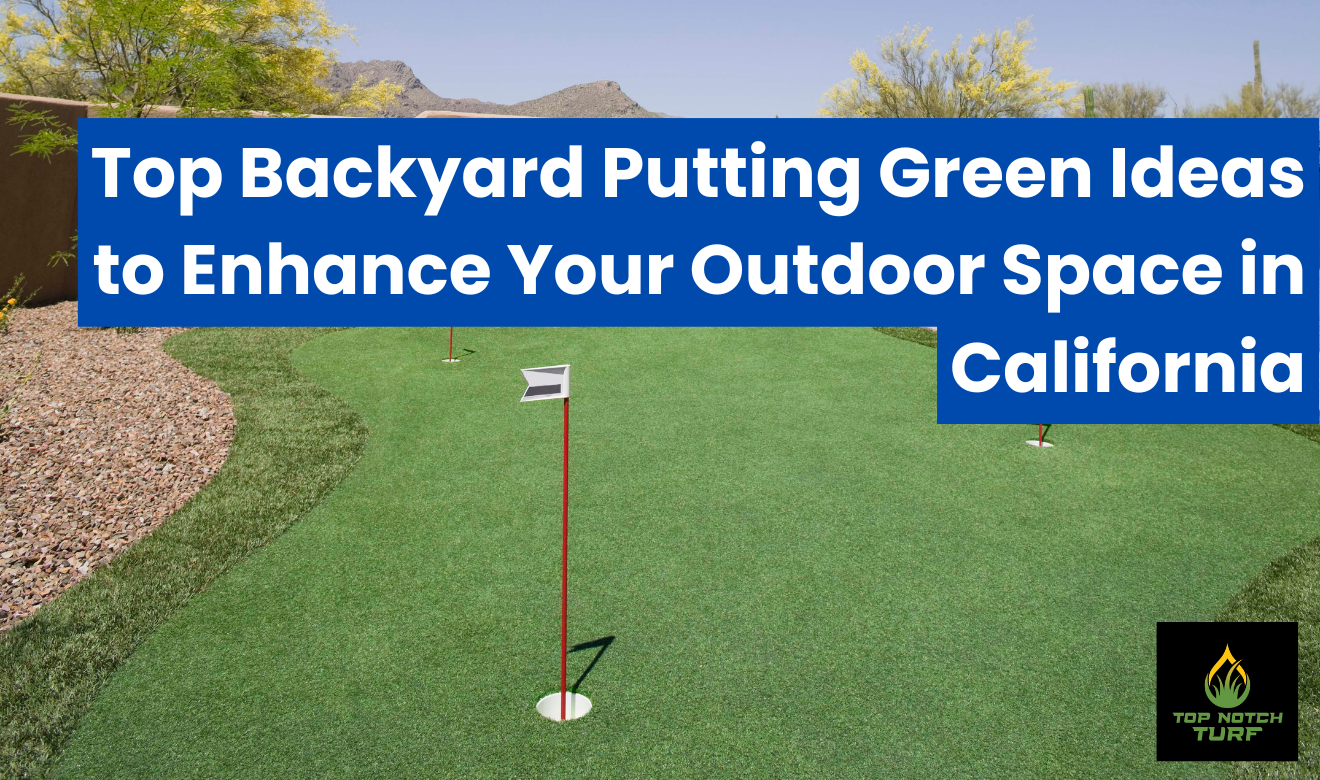
Backyard putting green ideas are practical design and construction options for installing a realistic golf putting surface in a California backyard. In coastal zones like San Diego, Santa Monica, and the Bay Area, a popular approach is a 250–600 sq ft synthetic green with 3/8 inch per foot slope for clean ball roll and fast drainage during marine-layer moisture. In hot inland areas like Riverside, Sacramento, and the San Fernando Valley, many homeowners add a compact 200–450 sq ft layout with heat-managed infill, perimeter cooling shade from existing hardscape, and a 2–4 inch crushed rock base to prevent ripples from soil expansion. In hillside regions such as Walnut Creek, Pasadena, and parts of Orange County, tiered greens with low retaining borders and a French drain outlet reduce runoff during winter storms and keep stimp speed consistent. Common upgrades include a 3–6 ft fringe for chipping practice, 2–4 cups with varied break lines, and a collar grade that directs water away from patios, pools, and foundations.
Plan the Layout Around Real Ball Roll and Safe Drainage
A functional home putting surface starts with a layout that produces predictable break, drains away from structures, and gives you multiple practice lines. Before choosing turf, lock in the size, cup locations, and runoff direction so construction tolerances can be met.
For most California backyards, a practical starting point is a 200–600 sq ft green plus a surrounding fringe/collar. Use a simple site sketch and mark the perimeter with paint or a garden hose, then confirm:
- Primary putting lines: at least two straight putts of 8–12 ft and two breaking putts of 6–10 ft.
- Runoff control: surface water must be directed away from patios, pool decks, and foundations; keep the final grade intentionally draining to landscape areas or a designed outlet.
- Setbacks and utilities: mark sprinklers, gas lines, cleanouts, and drains before excavation (California’s 811 service is the standard process to identify buried utilities prior to digging).
- Edges: plan a hard edge (bender board, concrete mow curb, or compacted border) that resists movement and holds seams stable.
Choose Turf Systems That Match Your Microclimate
Different California microclimates stress turf differently, so fiber type, infill, and backing should be selected to manage heat, moisture, and drainage. Synthetic putting products are typically nylon or polypropylene fibers with engineered backing and infill tuned for green speed.
Use these selection rules to avoid common performance issues:
- Coastal (marine layer and frequent morning moisture): prioritize fast-draining base design and stable seams; choose a system that holds stimp consistency when damp.
- Hot inland (high surface temps): specify heat-managed infill options and ensure the base is thick and uniform to prevent ripples from expansive soils and temperature cycling.
- Hillside (runoff and erosion risk): prioritize positive drainage, retaining borders, and a defined outlet such as a French drain discharge point.
It also helps to understand the broader category of artificial turf—especially how backing, infill, and drainage layers work together—so you can compare products by construction method instead of marketing names.
Build the Base Like a Hardscape Project (Because It Is)
A consistent stimp speed comes from base uniformity, not just the surface carpet. The base should be excavated, compacted, and graded to tight tolerances so the turf doesn’t telegraph dips, ridges, or seam lines.
A typical residential build sequence uses layered aggregate with mechanical compaction:
- Excavate to design depth: depth depends on intended base thickness plus turf and infill; remove roots and organic material that will decay and create voids.
- Install geotextile where needed: use separation fabric on weak subgrades to reduce contamination of base rock by native soil.
- Place and compact base aggregate: common practice is 2–4 inches of crushed rock installed in lifts and compacted to reduce future settling.
- Fine-grade and shape contours: form breaks and drainage planes; keep transitions smooth so the ball roll remains true.
- Proof-roll and correct: walk the area and check with straightedges; fix any pumping or soft spots before turf goes down.
Grading control: the 3/8 inch per foot guideline often used for drainage is a measurable target—verify it with a laser level or string line. Avoid creating a “bowl” that traps water; instead, create a controlled plane that sheds moisture toward an outlet.
Drainage Details That Prevent Bubbling, Odor, and Edge Heave
Good drainage is what keeps the surface flat, the infill stable, and the seams from opening. In California, drainage design should also anticipate winter storm bursts and, in many areas, expansive clay soils.
Use these drainage upgrades when the site demands them:
- Perimeter drain / French drain: place a perforated drain line in washed gravel with filter fabric, sloped to a legal discharge point on your property.
- Hillside interception: capture sheet flow above the green with a shallow swale, drain trench, or hardscape curb to prevent runoff crossing the putting surface.
- Downspout management: never discharge roof water onto the green base; route downspouts to drains or approved landscape infiltration areas.
- Collar grading: shape the fringe and collar to pull water away from slabs and footings.
Permitting note: drainage tie-ins to storm systems can require local approval; follow your city/county public works rules and avoid unpermitted connections. Keeping discharge onsite in landscape infiltration zones is often simpler, but must still prevent nuisance runoff to adjacent property.
Putting Surface Specs: Speed, Cups, and Seam Placement
Performance comes down to precision: cup installation, seam placement, and final rolling/compaction determine whether putts track cleanly. Treat cup locations and seams as permanent “fixtures” that should be set where traffic and break lines make sense.
Installation best practices that directly affect play:
- Cups: install 2–4 cups so you can rotate wear patterns; avoid placing cups at the very bottom of a slope where putts will never stop.
- Seams: keep seams out of primary putting lanes and cup surrounds; align grain direction consistently if the turf product has a nap.
- Edge fastening: edges must be secured and supported so the perimeter doesn’t lift with temperature changes.
- Final tuning: topdress and brush to stabilize fibers; use controlled rolling only after infill is balanced, not as a shortcut for base imperfections.
Add a Fringe, Collar, and Practice Zone Without Wasting Space
A small fringe and collar can turn a simple putting pad into a full short-game station. The key is matching heights and transitions so the ball behaves realistically from off-green lies.
Common add-ons that fit typical California lot sizes:
- 3–6 ft fringe: supports bump-and-run shots and protects the green edge from traffic.
- Chipping landing area: a slightly larger apron section aimed at the most-used cup to practice distance control.
- Sideboard containment: subtle borders or landscape edges that keep balls in play without looking like a batting cage.
- Step-out access: a paver or decomposed granite path reduces infill tracking into the house.
If your project includes outdoor recreation zones beyond golf—like a pool deck—coordinate materials and drainage so everything behaves as one system. Many homeowners pairing a green with a pool area use the same low-maintenance surface strategy described in poolside synthetic grass installations, especially where splash-out and wet feet are daily realities.
California-Specific Durability Considerations (Sun, Salts, and Expansive Soil)
Sun exposure, coastal air, and soil movement are the main long-term threats to a flat roll. Address them during design so maintenance stays simple.
Build choices that reduce long-term callbacks:
- Heat exposure: include shade planning (pergola edges, existing hardscape shade lines) and select infill strategies designed for hotter inland yards.
- Salt air near the coast: rinse occasionally and keep drainage pathways open so fine debris doesn’t bind infill.
- Expansive clay soils: use a thicker, well-compacted aggregate base and avoid mixing native soil into the base layer.
- Tree debris: keep heavy leaf drop away from cup zones; plan cup locations away from drip lines to reduce organic buildup.
Core Specs and Local Guidelines (Quick Reference)
This table summarizes measurable specifications that most homeowners can verify during planning and installation. Use it as a checklist when comparing bids and validating the finished grade.
| Feature / Metric | Specifications | Local Guidelines |
|---|---|---|
| Typical green size (residential CA) | 200–600 sq ft green footprint; add 3–6 ft fringe for short-game use | Confirm property lines, easements, and HOA rules before fixing boundaries |
| Surface slope for drainage | Target ~3/8 inch per foot where a consistent plane is needed | Drain away from foundations and avoid nuisance runoff to adjacent lots |
| Aggregate base thickness | Common residential range: 2–4 inches crushed rock (installed in lifts and compacted) | Increase base robustness on expansive soils and high-heat inland sites |
| Cup count and placement | 2–4 cups; vary break lines; keep cups off extreme low points | Avoid conflicts with utility lines, cleanouts, and drainage inlets |
| Hillside runoff control | Tiered shaping, low retaining borders, and optional French drain outlet | Outlet must stay on-property unless an approved connection exists |
| Heat management (inland) | Heat-managed infill strategy + shade planning near hardscape edges | Plan irrigation sleeves or hose access if occasional cooling rinse is desired |
Maintenance That Preserves Stimp and Keeps the Green Looking New
Synthetic greens stay consistent when debris is removed, fibers are kept upright, and infill remains evenly distributed. A simple routine prevents slow spots, algae in shaded corners, and seam stress.
Use this maintenance schedule for most California yards:
- Weekly (or after heavy use): blower removal of leaves and grit; quick visual check of cup edges and seams.
- Monthly: brush against the grain to stand fibers up; redistribute infill from high-traffic lanes back into low areas.
- Seasonally (coastal/humid shade zones): inspect for algae or slick spots; improve sun exposure or airflow where possible and keep drainage paths clear.
- After storms: verify that water exits as designed and that no sediment has washed onto the surface.
If your yard also needs surfaces that handle pets without sacrificing cleanliness, the cleaning approach used for synthetic lawns applies directly to fringe areas and access paths; see these pet waste cleanup methods for artificial grass to prevent odor and residue around high-traffic zones.
When to Use a Specialist Installer vs. DIY
If you want realistic roll and durable seams, professional grading and installation is usually the deciding factor—not the turf brand alone. DIY is best limited to small, flat, low-drainage-risk yards where you can measure and compact accurately.
Consider specialist help when any of the following are true:
- Hillside or retaining edges: tiering and runoff control must be engineered to prevent erosion and edge movement.
- Drainage complexity: you need a French drain, swale, or managed outlet.
- High heat + expansive soil: base thickness and compaction quality will dictate long-term flatness.
- Multi-surface integration: the green ties into pool decks, patios, or outdoor kitchens where water direction matters.
For homeowners who want a purpose-built, realistic short-game surface with proper base prep and cup installation, Putting Greens Turf Services is designed specifically for these construction and performance requirements.
Build It Once, Roll It True for Years
The best backyard greens are planned like a drainage-and-grading project first and a golf feature second. When the base is compacted, slopes are measured, and runoff is controlled, the surface stays fast, smooth, and predictable across coastal moisture, inland heat, and winter storms.
Prioritize measurable specs—base thickness, verified slope, stable edges, and smart cup placement—then add the fringe and chipping zones that make practice feel like a real facility. Done correctly, you get a clean roll, minimal maintenance, and a backyard short-game setup that performs consistently season after season.
Frequently Asked Questions
Ready for a Backyard Putting Green That Rolls True (and Stays That Way)?
A backyard putting green isn’t a “roll out the turf and call it done” project—it’s a grading, drainage, and precision-install job where tiny mistakes show up every single time you putt. If the base isn’t compacted in lifts, slopes aren’t measured, and runoff isn’t controlled, you can end up with low spots that hold water, ripples from soil expansion, seams that telegraph through primary putting lines, and edge lift that turns into constant patchwork fixes. And once water starts moving the wrong direction—toward patios, pools, or foundations—you’re no longer dealing with a golf upgrade… you’re dealing with property-risk headaches.
California yards add their own curveballs: marine-layer moisture that exposes weak drainage, inland heat that amplifies surface temps and movement, hillside runoff that can undermine borders, and expansive soils that punish thin or uneven base work. The fastest way to waste money is to treat these as “nice-to-have” details instead of the core build requirements they are.
If you want a green that drains correctly, holds consistent speed, keeps seams invisible where it matters, and stays flat season after season, get it designed and installed by a local specialist who builds these systems the right way—base, slope, outlet, cups, and collar included.
Related Posts

Expert Guide to Backyard Turf Landscaping Ideas in San Diego, California
Executive Summary Backyard turf landscaping ideas San Diego work best when the design is built…

The Ultimate Guide to Choosing Synthetic Grass for High Traffic Areas in San Diego, California
Executive Summary Synthetic grass for high traffic areas in San Diego only holds up when…

Expert Guide to Artificial Turf Installation for Poolside Landscaping in San Diego, California
Executive Summary Artificial turf installation for poolside landscaping San Diego works best when it’s engineered…