
How Does Artificial Turf Drainage Work in San Diego, California?
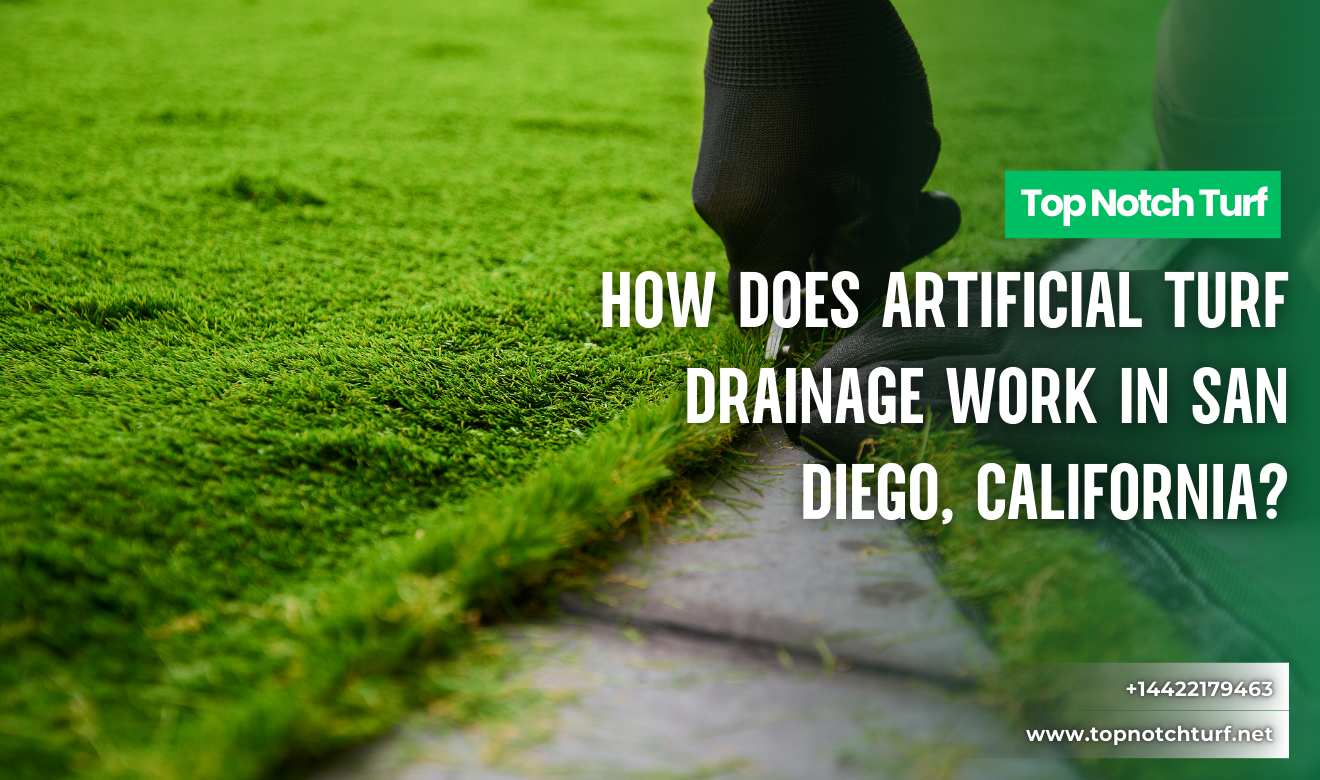
How artificial turf drainage works San Diego is simple: rainwater moves through the turf’s holes, passes into the base layer, and then flows away through grading and drains so it doesn’t pool on the surface. In San Diego’s quick downpours, the turf acts like a filter while the compacted aggregate base does the real draining. For example, a properly built yard slopes slightly toward a drain line or the street, so water from a sudden storm doesn’t sit near patios or doorways. Another example is a small dog run that uses a permeable base and a drain at the low point, so rinse water and rain exit fast instead of turning into puddles.
How artificial turf drainage works in San Diego (the quick, accurate breakdown)
If you’re trying to understand how artificial turf drainage works San Diego homes and businesses rely on, it helps to think in layers. Turf doesn’t “soak up” water—its job is to let water pass through fast and evenly.
The 3-layer system that prevents puddles
- Turf backing (perforated): Tiny drainage holes allow water to pass through.
- Infill (optional depending on use): Helps keep blades upright and can affect flow slightly, but it’s not the primary drainage path.
- Base (the real drainage engine): A compacted aggregate layer moves water laterally toward the low point and/or drain.
In other words, how artificial turf drainage works San Diego properties best is mostly about what’s underneath: the base depth, compaction, and correct slope.
Why San Diego drainage design is different than other cities
San Diego doesn’t get constant rain like the Pacific Northwest, but when storms arrive, they can drop heavy bursts in a short time. That’s exactly when drainage mistakes show up.
Local factors that change drainage performance
- Fast downpours that overwhelm flat yards or poorly planned runoff routes
- Clay-heavy soils in some neighborhoods that slow natural percolation
- Hardscapes everywhere (patios, pool decks, side yards) that redirect water into turf areas
- Slopes and retaining walls that can trap runoff if the turf area becomes the low point
That’s why how artificial turf drainage works San Diego installations are built around “move water out quickly,” not “hope it soaks in.”
What “good drainage” looks like after installation
Homeowners usually ask what they should expect right after it rains. Here’s a simple, snippet-friendly benchmark.
Signs your turf drainage is working properly
- No standing water on the turf surface after typical rain
- Water disappears within minutes, not hours
- No “squishy” feeling when walking (especially near edges)
- No muddy runoff bleeding onto concrete
- No persistent odor in pet areas after rinsing
When people search how artificial turf drainage works San Diego, they’re usually trying to prevent pooling near foundations, doorways, patios, or dog runs—these are the first places to reveal issues.
The base layer: where drainage is won or lost
The base is the difference between turf that drains beautifully and turf that turns into a shallow basin. Even though turf has drainage holes, water can’t “go anywhere” if the base is too thin, incorrectly compacted, or flat.
Common base materials used for turf drainage
- Crushed aggregate (often used for stability + drainage)
- Decomposed granite (DG) (used in some builds but must be installed correctly to avoid compaction issues)
- Permeable base blends (common in pet zones to improve rinse-out flow)
For many yards, the most practical answer to how artificial turf drainage works San Diego is: “A properly graded, compacted aggregate base directs water to the intended exit point.”
Grading and slope: the hidden step homeowners don’t see
Drainage usually fails because the area is too flat—or sloped toward the wrong place. A professional installer shapes the base so water naturally moves to a low point (like a drain, landscape edge, or approved runoff direction).
Where water should go
- Toward a yard drain connected to an appropriate discharge point
- Toward a street-facing runoff route where permitted
- Toward a landscape drainage swale designed to carry water away
This is the practical core of how artificial turf drainage works San Diego neighborhoods with tight side yards and lots of concrete: you plan the exit route first, then build everything to support it.
Drainage options used in San Diego turf projects
Not every turf area needs a full drainage system, but many do—especially when turf sits next to hardscapes or sits below surrounding grades.
Most common drainage solutions
- French drains: Gravel + perforated pipe that carries water away underground
- Area drains (catch basins): Great at low points where water collects
- Channel drains: Ideal along patios, pool decks, and garage entries
- Permeable sub-base upgrades: Often used for pet runs and rinse-down zones
Choosing the right approach is a big part of how artificial turf drainage works San Diego installs that stay dry through winter storms.
Pet turf drainage: why dog runs need special planning
Dog runs aren’t just about rain—they’re about rinse water and urine moving through the system quickly. That means drainage and hygiene are tied together.
What makes pet areas different
- More frequent liquid flow (rinsing)
- Higher odor risk if water sits
- Greater need for a defined low point + drain
If you’re building a dog run, understanding how artificial turf drainage works San Diego pet areas is essential: you want liquids to exit fast so the area stays usable and smells clean. If you also want an easier routine for cleanup, this guide is helpful: 5 tips to easily clean up pet waste from artificial grass in San Diego.
Putting greens, playgrounds, and pool surrounds: drainage priorities change
Different turf uses require different drainage tradeoffs. A backyard lawn drains differently than a putting green because firmness, ball roll, and surface uniformity matter more.
Use-case priorities that affect drainage design
- Putting greens: Smoothness and stability; drainage must be consistent to prevent low spots
- Playgrounds: Safety and impact absorption; drainage supports cleanliness and reduces slickness
- Pool areas: Splash-out management and non-tracking surfaces; drainage prevents slippery zones
For pool decks, drainage is often part of the comfort factor. If you’re designing around a pool, you may like this read: perfect pool area with high-quality synthetic grass in San Diego.
Quick troubleshooting: why water might be pooling on turf
If you’re researching how artificial turf drainage works San Diego because something feels “off” after rain, these are the most common causes.
Main reasons turf may hold water
- Insufficient slope (base wasn’t graded correctly)
- Low spot or “birdbath” in the base layer
- Base too thin for the site conditions
- Over-compacted or wrong base material that slows lateral flow
- Drain line missing or undersized for the runoff volume
- Edge trapping (concrete borders or bender board creates a dam effect)
In most cases, the turf itself isn’t the problem—the water is getting through the turf just fine. The challenge is what happens after that, which is why how artificial turf drainage works San Diego is really a base-and-outflow conversation.
Drainage performance comparison (helpful for planning)
Below is a planning-friendly view of how different turf areas typically handle water when built correctly. (Actual results depend on soil, grading, and drain placement.)
| Area type | Most important drainage feature | Common San Diego add-on |
|---|---|---|
| Backyard lawn | Consistent slope + compacted aggregate base | Area drain at low point |
| Dog run | Permeable base + fast exit route for rinse water | French drain or catch basin |
| Pool surround | Surface runoff control (prevents slick edges) | Channel drain along hardscape |
| Putting green | Uniform base and precision grading | Sub-surface drain network (as needed) |
Materials and standards: what “quality turf drainage” is built on
When evaluating how artificial turf drainage works San Diego projects, it’s smart to ask what products and installation standards are being used. Synthetic turf systems vary by backing type, pile height, and intended use. If you want a general overview of synthetic turf construction and history, see artificial turf.
What to ask an installer (simple, high-impact questions)
- How will you grade the area, and where will the water exit?
- What base material will you use, and how deep will it be?
- How will you compact the base to prevent settling?
- Do you recommend a drain line or catch basin for this layout?
- How do you handle drainage around concrete edges and patios?
These questions get straight to how artificial turf drainage works San Diego yards in real life: slope + base + a clear discharge plan.
When you should upgrade drainage (instead of hoping for the best)
Some sites can “get away with” basic drainage. Others should be upgraded from day one to avoid rework.
You’ll likely need enhanced drainage if:
- Your yard is below surrounding hardscapes or retaining walls
- You already see puddling in the area with natural soil
- You have downspouts dumping near the turf zone
- The area is a pet run that gets rinsed often
- You’re installing turf next to foundations, garages, or patios
These are the scenarios that most often drive searches for how artificial turf drainage works San Diego—because drainage problems are expensive to ignore.
Service option to match drainage needs
If your main concern is fast drainage in a rinse-down zone (like a dog run), a purpose-built system is usually the most efficient route. Explore Pet Turf Services if you want a turf setup designed around odor control, cleanup, and reliable water exit.
Built to Drain, Built to Last
How artificial turf drainage works San Diego really comes down to smart planning beneath the surface: the turf backing lets water through, the base layer moves it efficiently, and the grading/drainage system sends it to the right place. When those steps are done correctly, turf holds up to sudden storms, daily use, and routine rinsing without turning into a puddle zone.
Installers who specialize in drainage-focused builds typically follow industry best practices: proper excavation, correctly selected aggregate base, mechanical compaction in lifts, precision grading, and drainage integration where the site demands it. That combination is what keeps how artificial turf drainage works San Diego results consistent year after year—especially in properties with tight side yards, lots of concrete, and fast winter downpours.
Frequently Asked Questions
Stop Puddles Before They Start—Get a Drainage-First Turf Plan
San Diego storms don’t give you a “test run.” If you want turf that drains fast (especially near patios, doorways, or pet zones), it all comes down to what’s underneath: proper grading, a compacted base, and a clear exit route for water. Top Notch Turf builds artificial turf systems the right way—so water moves through, not across—helping you avoid squishy spots, low-point pooling, and drainage rework later.
Related Posts

Top 5 Tips for Choosing Artificial Grass Installers in San Diego, California
To choose the right crew for your lawn project, start by reading the best artificial…

How to Select the Best Artificial Grass for Pet Owners in San Diego, California
To choose the right artificial grass San Diego pet owners can rely on, focus on…

Top Benefits of Installing Artificial Grass in San Diego, California
Installing artificial grass in San Diego, California is one of the easiest ways to get…